Lancaster Kitchens & Baths: Expert Bathroom Design and Remodeling in Lancaster County, PA
Bathroom remodeling just claimed the top spot in American home improvement. According to the National Association of Home Builders’ latest quarterly survey, bathroom remodeling was the most common project in 2025, with 73 percent of professional remodelers rating it common to very common—outpacing kitchen remodeling, whole-house renovations, and every other category the NAHB tracks. For Lancaster County homeowners weighing whether this is the right year to finally update that outdated master bath or cramped hall bathroom, the national data confirms what local contractors are seeing on the ground: demand is surging, and the reasons run deeper than aesthetics.
Several converging forces explain why bathrooms have overtaken kitchens at the top of the remodeling hierarchy. An aging housing stock across Pennsylvania means millions of homes still carry original bathrooms from the 1970s, 1980s, and 1990s that were never designed for how families live today. Mortgage rates hovering well above where they sat during the 2020–2021 refinancing boom continue to lock homeowners in place, making renovation the practical alternative to moving. And a growing awareness of wellness-centered design—larger showers, better lighting, accessibility features—has elevated the bathroom from purely functional space to personal sanctuary.
The Financial Case Is Stronger Than Ever
The NAHB’s Remodeling Market Index hit 64 in the fourth quarter of 2025, up four points from the previous quarter, with every component sitting above the break-even threshold of 50. NAHB Chief Economist Robert Dietz pointed to an aging housing stock, strong homeowner equity, and increasing demand for aging-in-place modifications as key growth drivers heading into 2026. The large-project component—covering renovations of fifty thousand dollars or more—climbed five points to 69, signaling that homeowners are not just making cosmetic updates. They are committing to comprehensive transformations.
For Lancaster County specifically, these national trends carry local weight. The region’s housing stock skews heavily toward mid-century and late-twentieth-century construction. A home built in the 1980s in Lititz or Mount Joy likely features a builder-grade bathroom with a fiberglass tub-shower combination, limited storage, poor lighting, and no accessibility considerations. Thirty-five to forty years of daily use takes a toll on plumbing, tile grout, and ventilation systems that were marginal when installed. At some point, patching and caulking stops being a solution and a full remodel becomes the financially sound decision.
Homeowner equity provides the fuel. Pennsylvanians who purchased homes before 2022 have seen substantial appreciation, giving them borrowing capacity through home equity lines of credit without touching their low-rate first mortgages. This equity position makes bathroom remodeling accessible even at higher interest rates because homeowners are investing in assets they already own rather than taking on entirely new mortgage debt.
The rate lock-in effect deserves particular attention in Lancaster County. Homeowners who refinanced or purchased at rates below four percent during 2020 and 2021 face a powerful financial disincentive to move. Selling a home with a 3.1 percent mortgage and purchasing a comparable property at current rates would add hundreds of dollars to monthly housing costs—money that could instead fund a comprehensive bathroom remodel that transforms daily life while building equity. NAHB economists have identified this dynamic as one of the primary structural drivers of sustained remodeling demand, and it shows no sign of reversing as long as rates remain elevated relative to the pandemic-era lows that millions of homeowners locked in.
What’s Actually Driving the Demand
The NAHB’s remodeler sentiment survey found that 98 percent of professional remodelers reported that most or some of their clients are now familiar with aging-in-place concepts—up from 75 percent two decades ago. That awareness is translating directly into bathroom renovation decisions. Grab bars that double as towel bars, curbless shower entries, comfort-height toilets, and wider doorways are showing up in projects for homeowners in their forties and fifties, not just those already facing mobility challenges.
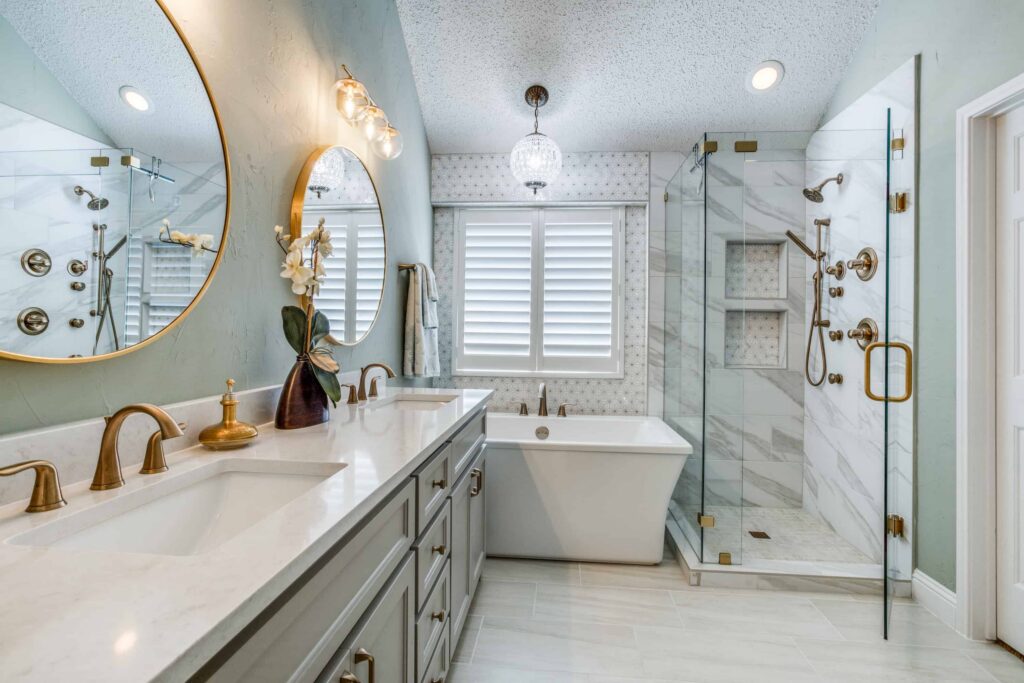
Simultaneously, the wellness trend is reshaping what homeowners expect from a bathroom remodel. The desire for spa-like features—rainfall showerheads, heated flooring, layered lighting with dimming capability—has moved from luxury aspiration to mainstream expectation. Homeowners who previously considered these upgrades excessive are now including them in mid-range budgets as the cost of individual components has become more accessible.
Understanding the specific design movements shaping these decisions helps homeowners plan smarter renovations. The 2026 Bathroom Trends That Are Reshaping Lancaster County Remodels breaks down the industry data on what designers and remodelers are seeing as the most requested features this year, from oversized showers to smart storage solutions that eliminate clutter.
Planning a Bathroom Remodel in Today’s Market
Lancaster County homeowners entering the bathroom remodeling market in 2026 face a landscape that rewards planning and penalizes impulse. Material costs have been volatile due to tariff pressures on imported tile, fixtures, and plumbing components. Forty percent of the ceramic tile sold in the United States is imported, and plumbing fixtures, valves, and rough plumbing components are heavily sourced from China and other Asian manufacturing centers. These supply chain realities mean lead times on certain products fluctuate and pricing can shift between the estimate phase and the installation phase of a project. Contractor schedules also fill quickly during the spring and summer building season, giving homeowners who plan ahead a meaningful advantage in securing preferred timelines.
The most effective approach starts with understanding scope. A cosmetic refresh—new paint, updated hardware, a replacement vanity—costs a fraction of a gut renovation that moves plumbing, expands footprints, or converts a tub alcove into a walk-in shower. Knowing which category your project falls into determines budget, timeline, and the level of professional involvement required. Most industry data puts the average bathroom remodel nationally between six thousand and eighteen thousand dollars, with primary bathroom renovations and comprehensive gut remodels pushing well above those figures depending on materials and complexity.
Budget overruns remain the industry’s most persistent challenge. Survey data consistently shows that roughly half of bathroom remodelers exceed their planned budgets, with plumbing and electrical upgrades accounting for the largest share of unexpected costs. In Lancaster County’s older housing stock, opening walls during a remodel frequently reveals outdated plumbing—galvanized steel pipes, polybutylene supply lines, or inadequate venting—that must be addressed for both code compliance and long-term reliability. Building a contingency of 15 to 20 percent into your budget accommodates these discoveries without derailing the project.
Working with a local remodeler who maintains showroom inventory and supplier relationships provides a significant advantage. Being able to see and touch materials in person—rather than gambling on online photos—prevents costly mistakes. A tile that photographs as warm cream may read as clinical white under bathroom lighting. A vanity that looks spacious in a catalog may overwhelm a smaller bathroom. Hands-on selection eliminates these risks. Local remodelers also understand the specific challenges of Lancaster County construction, from the stone foundations of older borough homes to the slab-on-grade builds common in newer subdivisions, and can anticipate issues that out-of-area contractors might miss.
For homeowners considering accessibility as part of their renovation, the investment case becomes even stronger. Understanding Why Lancaster County Homeowners Are Building Aging-in-Place Bathrooms Now—Not Later reveals how proactive planning during a remodel costs a fraction of retrofitting the same features after the fact, while dramatically improving both daily function and long-term home value.
Lancaster Kitchens & Baths: Your Bathroom Remodeling Partner
Lancaster Kitchens & Baths has redesigned and remodeled hundreds of bathrooms throughout Lancaster County, from historic Lancaster city row homes to spacious Lititz colonials and Mount Joy farmhouses. Our team coordinates every trade—plumbing, electrical, tile, finishes—so you have one point of contact from design through completion.
Our Services Include:
- Bathroom Remodeling – Complete design and installation for bathrooms of every size and style
- Full project management with licensed plumbing, electrical, and tile professionals
Ready to Start Your Bathroom Transformation? Contact Lancaster Kitchens & Baths to schedule your free design consultation and see materials firsthand at the LKB Home Center showroom.
Works Cited
“Bathroom Remodeling Is Most Common Project in 2025.” Eye on Housing, National Association of Home Builders, 30 Jan. 2026, eyeonhousing.org/2026/01/bathroom-remodeling-is-most-common-project-in-2025/. Accessed 17 Feb. 2026.
“Remodeling Market Sentiment Strengthens in Fourth Quarter of 2025.” National Association of Home Builders, 16 Jan. 2026, www.nahb.org/news-and-economics/press-releases/2026/01/remodeling-market-sentiment-strengthens-in-fourth-quarter-of-2025. Accessed 17 Feb. 2026.
Related Articles
- The 2026 Bathroom Trends That Are Reshaping Lancaster County Remodels
- Why Lancaster County Homeowners Are Building Aging-in-Place Bathrooms Now—Not Later