
Lancaster Kitchens and Baths: Transforming Central Pennsylvania Homes Since 1986
The financial case for kitchen remodeling has never been stronger than it is heading into 2026. New data confirms that minor kitchen remodels now deliver a remarkable 113% return on investment, making them the highest-performing interior home improvement project available to homeowners. For Central Pennsylvania residents weighing renovation decisions against other potential investments, this return profile transforms kitchen upgrades from discretionary spending into strategic wealth-building.
The home improvement industry tracks project returns meticulously through annual cost versus value analyses, and the 2025 data reveals significant shifts that favor kitchen investments. According to Fixr.com’s analysis of the 2025 Cost vs. Value Report, minor kitchen remodels jumped 17 percentage points from the previous year, climbing from 96.1% to 113% ROI. This positions kitchen improvements as the leading indoor project for value recovery, outperforming bathroom remodels at 80% ROI and far exceeding major kitchen overhauls that return just 38% of invested costs.
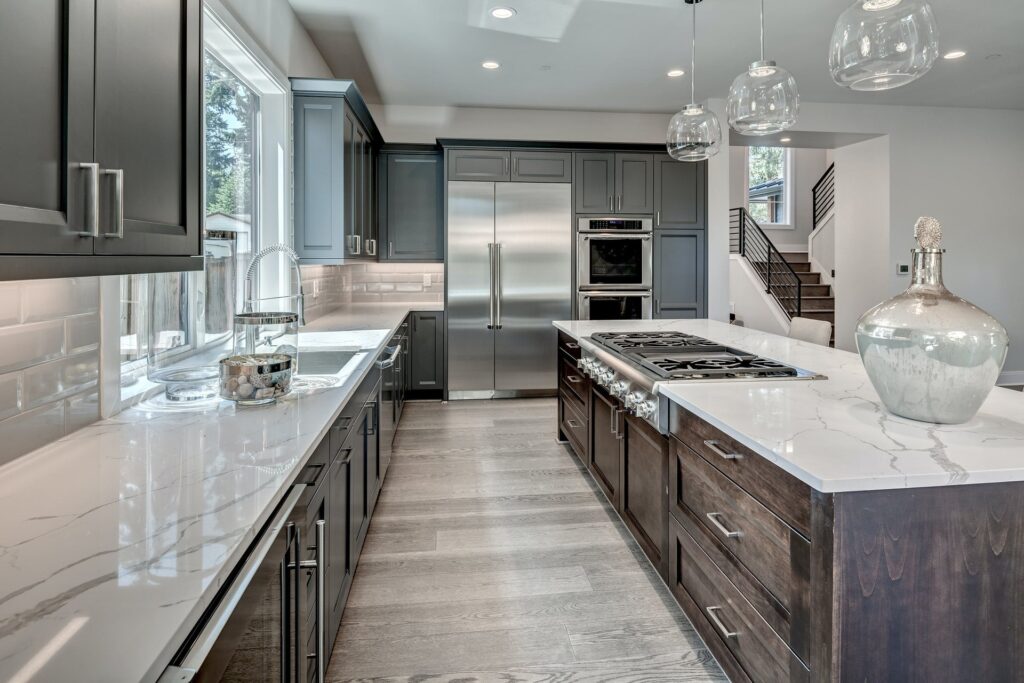
Understanding what constitutes a minor versus major kitchen remodel helps homeowners plan strategically. Minor remodels focus on refreshing existing elements rather than reconfiguring layouts or expanding footprints. Typical minor projects include cabinet refacing or replacement, countertop upgrades, new appliances, updated lighting, backsplash installation, and flooring replacement. These improvements transform kitchen appearance and functionality while working within existing plumbing, electrical, and structural configurations. The average minor kitchen remodel costs approximately $27,000, making it accessible for homeowners who might find major renovations financially prohibitive.
The Remodeling Market Reaches New Heights
The broader remodeling market context makes 2026 particularly favorable for kitchen projects. Industry analysts project total homeowner improvement and repair spending will reach approximately $526 billion by the first quarter of 2026, representing a new record high for the sector. This sustained growth reflects continued homeowner investment despite economic uncertainty, driven primarily by housing market dynamics that make renovation more attractive than relocation.
The “renovate rather than move” phenomenon has intensified as mortgage rate differentials create powerful incentives for homeowners to stay in place. Homeowners who secured mortgages at historically low rates during 2020-2021 face significant payment increases if they sell and purchase at current rates. This “lock-in effect” channels housing dollars into improvement projects rather than transaction costs and higher mortgage payments. Kitchen renovations rank among the most impactful improvements homeowners can make, addressing both daily living quality and long-term property value.
Harvard’s Joint Center for Housing Studies, which produces the quarterly Leading Indicator of Remodeling Activity, projects year-over-year spending growth of 2.5% through early 2026. While modest compared to pandemic-era gains that saw spending surge 25.3% during 2022-2023, this represents healthy stabilization after two years of post-pandemic contraction. Recent increases in existing home sales are expected to drive slow but steady growth as new owners invest in personalization and new sellers prepare properties for market.
Strategic Upgrades Deliver Maximum Returns
The dramatic difference between minor and major kitchen remodel returns reveals important lessons for homeowners planning 2026 projects. Major upscale kitchen remodels that cost approximately $161,000 return only 30.6% of investment, while minor remodels costing around $27,000 return 113%. This inverse relationship between project scope and return percentage suggests that thoughtful, focused improvements outperform comprehensive overhauls from a pure investment perspective.
Several factors explain why minor remodels perform better. First, buyers appreciate updated kitchens but may not value ultra-custom features at the premium homeowners paid for them. A prospective buyer sees a refreshed, functional kitchen rather than calculating the cost of professional-grade appliances or imported tile selections. Second, over-improvement relative to neighborhood standards creates a ceiling on recoverable value. A $160,000 kitchen in a neighborhood where homes sell for $350,000 cannot recoup investment regardless of execution quality.
The design trends shaping 2026 kitchens, explored comprehensively in [Spring 2026 Kitchen Trends Reshaping Lancaster County Homes: What Central PA Homeowners Need to Know], favor exactly the kind of timeless, quality-focused improvements that minor remodels emphasize. Rather than installing trend-driven features that may quickly date, successful minor remodels focus on durable materials, functional improvements, and neutral aesthetic choices that appeal to the broadest possible buyer pool when resale eventually occurs.
Countertops and Cabinets Lead Value Creation
Within minor kitchen remodels, specific upgrades deliver the greatest impact. According to Fixr.com’s detailed kitchen remodel analysis, countertop upgrades rank among the smartest investments, with granite and quartz surfaces delivering approximately 80% ROI. Natural stone surfaces signal quality to prospective buyers while providing practical benefits for daily cooking and entertaining. The material shift toward natural quartzite and wood, detailed in [Natural Wood and Quartzite: The Material Shift Transforming Central PA Kitchens in 2026], aligns with both return optimization and current design preferences.
Cabinet updates represent another high-impact improvement category. Cabinet refacing, which involves replacing doors and drawer fronts while retaining existing cabinet boxes, delivers an impressive 96.1% ROI according to industry data. This approach dramatically reduces costs compared to full cabinet replacement while achieving visual transformation that matches buyer expectations. Refacing also reduces project timeline and disruption, allowing homeowners to enjoy their improved kitchens sooner.
Stainless steel appliances continue delivering strong returns at approximately 75% recovery. Energy-efficient models provide ongoing utility savings while signaling to buyers that the home is well-maintained and ready for move-in. Panel-ready appliances that integrate seamlessly with cabinetry are growing in popularity, with 72% of industry professionals identifying panel-faced refrigerators as trending features. These integrated options command premium pricing but may not deliver proportionally higher returns.
Understanding Pennsylvania’s Market Dynamics
Pennsylvania homeowners face distinct market dynamics that influence renovation decision-making. The commonwealth’s housing stock skews significantly older than national averages, with approximately 60% of homes statewide built before 1970. This aging inventory creates sustained demand for kitchen updates as original features wear out and layouts become increasingly obsolete compared to contemporary expectations.
The regional economy’s stability supports renovation investment in Lancaster County specifically. A diversified economic base spanning agriculture, healthcare, manufacturing, and tourism provides employment security that gives homeowners confidence to undertake significant projects. Population growth in the region has accelerated as remote work flexibility draws residents from higher-cost metropolitan areas, supporting property values and creating demand for updated housing.
Local housing market conditions in Lancaster County favor renovation over relocation for many homeowners. Available inventory remains constrained while prices have appreciated steadily, making it difficult for homeowners seeking larger or updated kitchens to find suitable alternatives without significant premium. Renovating an existing property often proves more financially sound than purchasing a comparable home at current market prices, particularly when the existing mortgage carries a favorable interest rate.
Timing and Planning for Maximum Impact
For homeowners planning 2026 kitchen projects, timing considerations can influence both project costs and outcomes. Spring traditionally brings increased contractor availability as weather improves and demand spikes for exterior projects that compete for labor resources. Homeowners who complete design and planning during winter months position themselves to begin construction early in the season before summer’s peak demand period.
Material lead times have normalized compared to pandemic-era disruptions but still require advance planning for premium selections. Custom cabinet orders typically require eight to twelve weeks from specification to delivery. Natural stone slabs should be selected in person from supplier inventories rather than relying on photographs, as each piece varies in veining and coloration. Appliance availability has improved but specific models or finishes may still require ordering ahead.
Budget allocation within minor kitchen remodels should prioritize the elements that drive both daily satisfaction and resale returns. Countertops typically command 10-15% of total kitchen renovation budgets and deliver among the highest per-dollar returns. Cabinets represent 25-35% of budgets and dramatically impact visual presentation. Appliances at 15-20% of budget provide functional upgrades that buyers specifically evaluate. Lighting, backsplash, and flooring complete the transformation while requiring proportionally smaller allocations.
The Financial Case for Acting Now
Several factors suggest 2026 represents an opportune moment for kitchen renovation. Material costs have stabilized after years of inflation, with the tariff uncertainties affecting cabinet pricing largely resolved through supply chain adjustments. Contractor availability has improved as the industry absorbed post-pandemic demand spikes, reducing wait times and potentially creating pricing flexibility. Interest rates on home equity products, while elevated compared to pandemic lows, remain historically reasonable for homeowners with substantial equity.
The alternative to renovation, purchasing a different home, carries substantial transaction costs that renovation avoids. Real estate commissions, closing costs, moving expenses, and the interest rate differential between current and new mortgages can easily exceed the cost of a comprehensive kitchen renovation. Homeowners who renovate capture their investment in property value while avoiding transaction costs that benefit real estate professionals rather than building household wealth.
The psychological returns from kitchen renovation deserve mention alongside financial considerations. Kitchens function as the social center of most homes, hosting daily family interaction, entertaining, and increasingly, remote work. Living with an outdated or dysfunctional kitchen exacts daily costs in frustration, reduced enjoyment, and compromised functionality. The satisfaction of cooking, gathering, and living in a beautifully renovated kitchen extends beyond financial calculation into quality of life that homeowners experience every day until eventual resale.
Lancaster Kitchens and Baths: Your Central PA Kitchen Remodeling Partner
At Lancaster Kitchens and Baths, we have served Central Pennsylvania homeowners since 1986 with complete kitchen remodeling services. Our design-build approach ensures your renovation maximizes both return on investment and daily satisfaction, delivering a kitchen that serves your family beautifully while building lasting property value.
Our Full Kitchen Design Services:
- Kitchen Design and Remodeling – Complete kitchen transformations from concept through installation
Ready to Start Your Kitchen Project? Contact Lancaster Kitchens and Baths to schedule your design consultation and discover how strategic kitchen upgrades can maximize your Lancaster County home’s value.
Works Cited
“Cost vs Value 2025: Curb Appeal Projects Deliver Over 200% ROI.” Fixr.com, 1 Oct. 2025, www.fixr.com/articles/cost-vs-value. Accessed 20 Dec. 2025.
“How Much Value Does a Kitchen Remodel Add: ROI by State.” Fixr.com, 1 Oct. 2025, www.fixr.com/articles/kitchen-remodel-roi. Accessed 20 Dec. 2025.
Related Articles
- [Spring 2026 Kitchen Trends Reshaping Lancaster County Homes: What Central PA Homeowners Need to Know]
- [Natural Wood and Quartzite: The Material Shift Transforming Central PA Kitchens in 2026]