
Lancaster Kitchens and Baths: Transforming Central Pennsylvania Homes Since 1986
When planning a high-end renovation, partnering with an experienced kitchen remodeling contractor is the first step toward a successful transformation. A fundamental shift in kitchen material preferences is reshaping how Central Pennsylvania homeowners approach renovations as we head into 2026. After years of painted-cabinet dominance and engineered-surface popularity, natural materials like natural wood and quartzite are reclaiming their place at the center of kitchen design. The implications for Lancaster County homeowners planning spring projects extend beyond aesthetics into durability, resale value, and long-term satisfaction with one of the most significant investments they will make in their homes.
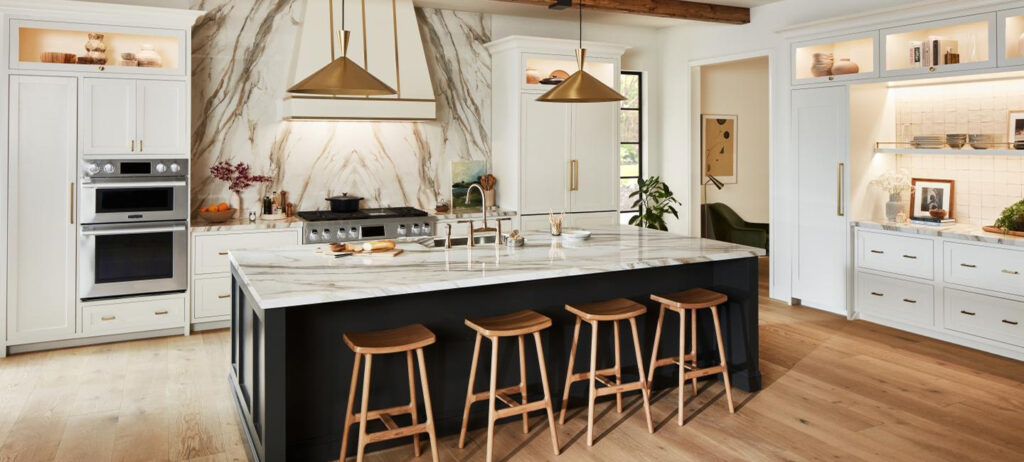
Industry data confirms the magnitude of this materials pivot. Wood grain cabinets are now growing faster in popularity than painted finishes, with 59% of kitchen and bath professionals identifying natural wood as an ascending trend according to the National Kitchen & Bath Association’s 2026 Kitchen Trends Report. White oak has emerged as the preferred species at 51% popularity, valued for its warm undertones, exceptional durability, and ability to complement both contemporary and traditional design schemes. Many residents seeking kitchen remodeling services are now prioritizing these organic textures. This resurgence reflects a broader consumer desire for authenticity and permanence in home investments rather than following fleeting design trends.
The shift away from painted cabinets represents a significant market correction. Throughout the 2010s, bright white and cool gray painted cabinets dominated kitchen design, appearing in countless home improvement shows and social media feeds. However, many homeowners who installed these trendy finishes are now finding their kitchens look dated just five to ten years later. Painted finishes also show wear more readily than natural wood, with chips, scratches, and yellowing becoming visible over time. Natural wood and quartzite develop character as they age, with minor wear contributing to warmth rather than detracting from appearance. This focus on longevity is central to modern kitchen remodeling design.
Pennsylvania’s Housing Stock Demands Thoughtful Material Selection
The housing stock dynamics driving renovation activity make material selection particularly consequential for Pennsylvania homeowners. The U.S. Census Bureau’s American Housing Survey, the premier federal source for comprehensive housing data, tracks critical information about housing age, condition, and improvement needs across the nation. Understanding housing characteristics helps communities and homeowners make informed improvement decisions that address both immediate needs and long-term value preservation.
Pennsylvania’s housing inventory skews older than national averages, with a substantial portion of homes dating to before 1970. These mature structures often benefit from material choices that honor their architectural character while delivering modern performance. A 1920s Lancaster County farmhouse or a 1960s suburban split-level each presents distinct design challenges that natural materials address more gracefully than manufactured alternatives. Wood cabinets and natural stone countertops create visual continuity with existing architectural elements like hardwood floors, wood trim, and masonry features. While some may look for an inexpensive kitchen renovation, investing in natural materials often provides better long-term value.
The broader trend context helps explain why Lancaster County homeowners should consider these material shifts seriously. As explored in [Spring 2026 Kitchen Trends Reshaping Lancaster County Homes: What Central PA Homeowners Need to Know], the industry is moving decisively toward timeless design over trend-chasing. Natural materials inherently support this philosophy because they develop character over time rather than appearing dated. A white oak kitchen installed in 2026 will look appropriate in 2036, 2046, and beyond, while a trendy manufactured finish may require replacement within a decade to maintain contemporary appeal. Our team specializes in custom kitchen remodeling to achieve these unique results.
The Quartzite Surge: Natural Stone Reclaims the Counter
For countertop selections, natural quartzite has surged to 62% popularity for countertops and 61% for backsplashes according to NKBA data, positioning it just behind engineered quartz in industry preferences. This represents a significant shift from previous years when engineered options dominated discussions among both designers and homeowners. Quartzite delivers the visual drama of marble, with distinctive veining and depth that engineered alternatives struggle to replicate, while offering superior heat resistance and durability for busy family kitchens. This material is a staple in luxury kitchen remodeling projects.
The distinction between quartzite and quartz confuses many homeowners, but understanding the difference matters for material selection. Quartzite is a natural metamorphic rock formed when sandstone is subjected to extreme heat and pressure deep within the Earth. Each slab is unique, with veining patterns and color variations that reflect its geological history. Quartz countertops, by contrast, are engineered products made from crushed quartz minerals combined with resins and pigments. While both materials offer excellent durability, quartzite provides the one-of-a-kind character that only natural stone can deliver.
The durability advantages of quartzite make it particularly suitable for families who use their kitchens intensively. Quartzite rates higher than granite on the Mohs hardness scale, providing exceptional scratch resistance for cutting, chopping, and daily wear. Heat resistance allows homeowners to place hot pots and pans directly on quartzite surfaces without damage, a convenience that engineered quartz cannot match. These practical benefits combine with aesthetic appeal to explain quartzite’s growing market share among discerning homeowners.
Dark Wood Cabinets Make a Dramatic Return
Dark wood cabinets are experiencing renewed interest after years of light and painted cabinet dominance. Design professionals predict darker woods will become the top choice in 2026, building on subtle trends that emerged in 2025. Rich walnut, deep cherry, and stained oak in espresso and chestnut tones create sophisticated backdrops that make natural stone countertops appear even more dramatic. The contrast between dark cabinetry and lighter countertops provides visual depth that monochromatic white kitchens cannot achieve.
This return to darker woods reflects broader color trends moving toward warmth and richness. The stark white kitchens that proliferated during the 2010s are giving way to layered designs incorporating multiple tones and textures. Dark lower cabinets paired with lighter upper cabinets or open shelving create visual interest while maintaining brightness in the upper portion of the room. Island cabinetry in contrasting wood tones establishes focal points that draw the eye and define gathering spaces within open floor plans.
The Pennsylvania Housing Research Center at Penn State University collaboratively engages with the residential construction industry to catalyze advancements in homebuilding through education, training, innovation, and research. Their work helping Pennsylvania’s construction industry build better homes includes attention to material selection, installation practices, and long-term performance. Homeowners benefit from choosing contractors who stay current with best practices for installing natural materials, as proper installation significantly impacts how wood cabinets and stone countertops perform over decades of use.
Textured Finishes Add Depth and Practicality
Beyond material selection, finish choices are evolving to emphasize texture over high-gloss perfection. Leathered and honed stone finishes are replacing polished surfaces for countertops, providing subtle texture that enhances natural beauty while hiding fingerprints, water spots, and everyday wear. These matte and semi-matte finishes create softer light reflection that contributes to warmer, more inviting kitchen environments. The practical benefit of reduced maintenance appeals to busy families who want beautiful kitchens without constant wiping and polishing.
Cabinet finishes are similarly moving toward more natural presentations. Heavy lacquers and high-gloss paints are giving way to hand-rubbed oils, natural waxes, and low-sheen stains that allow wood grain to show through clearly. These finishes develop patina over time, becoming more beautiful with age rather than showing wear as defects. The shift reflects a broader cultural movement toward authenticity and away from artificial perfection in home design.
The financial considerations of material selection connect directly to renovation returns. As detailed in [Minor Kitchen Remodel ROI Hits 113%: Why Central PA Homeowners Are Choosing Strategic Upgrades in 2026], countertop upgrades rank among the highest-return improvements homeowners can make. Natural stone countertops in particular signal quality to prospective buyers, while wood cabinets suggest craftsmanship and durability. These perceptions translate directly to appraisal values and sale prices when homes eventually reach the market.
Mixing Materials Creates Custom Character
Contemporary design increasingly embraces mixing different natural materials within single kitchen designs rather than maintaining uniformity throughout. Pairing different stone varieties for islands and perimeter countertops creates visual interest while addressing practical requirements. A dramatic veined marble or quartzite island centerpiece paired with more subdued granite or soapstone perimeter counters defines different work zones while maintaining design cohesion through shared natural character.
Cabinet mixing is similarly gaining acceptance among designers and homeowners. Wood species can vary between base and wall cabinets, or between primary cabinetry and island treatments. Painted accents on hood surrounds or display cabinets can punctuate predominantly wood designs without creating the all-painted aesthetic that feels dated. This layered approach creates kitchens with collected character rather than showroom uniformity, reflecting how personal spaces evolve.
The extended stone slab treatment continues gaining popularity, with backsplashes matching countertop materials to create seamless visual flow. Full-height backsplashes extending from counter to ceiling eliminate grout lines and create dramatic focal walls that showcase natural stone’s inherent beauty. Bookmatched veining patterns, where sequential slabs are opened like book pages to create mirrored designs, transform backsplashes into architectural art pieces that anchor entire kitchen designs.
Sustainability Considerations Drive Natural Material Selection
Sustainability considerations increasingly influence material selection as homeowners recognize the environmental implications of renovation choices. Natural materials like wood and stone require less processing than manufactured alternatives, reducing embodied energy and chemical inputs. Responsibly sourced wood from certified sustainable forests supports forest management practices that maintain ecosystem health. Natural stone, while requiring quarrying and transportation, lasts indefinitely with proper care, eliminating the replacement cycles that manufactured materials require.
The durability advantage of natural materials extends their environmental benefits over product lifecycles. A quartzite countertop installed in 2026 may remain in service for fifty years or more with proper maintenance, while engineered alternatives may require replacement within twenty to thirty years. Similarly, solid wood cabinets can be refinished multiple times over their lifespan, whereas laminate or thermofoil cabinets must be completely replaced when surfaces wear or delaminate. These lifecycle considerations increasingly influence homeowners who think beyond immediate project costs to long-term value and impact.
Making Natural Material Selections
For Lancaster County homeowners planning 2026 kitchen renovations, the natural materials trend suggests several strategic approaches to material selection. First, view material investment as a long-term decision rather than a short-term expenditure. The additional upfront cost of natural wood cabinets and stone countertops is offset by extended service life and sustained aesthetic appeal. Second, work with suppliers who can show multiple slab options for stone selections, as the unique character of natural materials means individual slabs vary significantly. Third, consider how natural materials will interact with existing architectural elements in your home, selecting species and stones that complement rather than compete with hardwood floors, brick features, and millwork.
The return to natural materials in kitchen design reflects a broader cultural shift toward authenticity, permanence, and connection with the natural world. For Central Pennsylvania homeowners whose regional architecture has long embraced these values, 2026’s material trends feel less like following fashion and more like coming home to design principles that have always made sense. The farmhouse kitchens, colonial kitchens, and craftsman kitchens that define Lancaster County’s residential character all benefit from thoughtful application of wood and stone selections that honor tradition while delivering modern performance.
Lancaster Kitchens and Baths: Your Central PA Kitchen Remodeling Partner
At Lancaster Kitchens and Baths, we have served Central Pennsylvania homeowners since 1986 with complete kitchen remodeling services. Our expertise in natural materials ensures your renovation will feature properly selected, expertly installed wood cabinets and stone countertops that will serve your family beautifully for decades.
Our Full Kitchen Design Services:
- Kitchen Design and Remodeling – Complete kitchen transformations from concept through installation
Ready to Start Your Kitchen Project? Contact Lancaster Kitchens and Baths to schedule your design consultation and explore how natural wood and stone can transform your Lancaster County kitchen.
Works Cited
“American Housing Survey (AHS).” U.S. Census Bureau, www.census.gov/programs-surveys/ahs.html. Accessed 20 Dec. 2025.
“Pennsylvania Housing Research Center.” Penn State College of Engineering, www.phrc.psu.edu/. Accessed 20 Dec. 2025.
Related Articles
- [Spring 2026 Kitchen Trends Reshaping Lancaster County Homes: What Central PA Homeowners Need to Know]
- [Minor Kitchen Remodel ROI Hits 113%: Why Central PA Homeowners Are Choosing Strategic Upgrades in 2026]