Lancaster Kitchens and Baths: Transforming Central Pennsylvania Homes Since 1986
The kitchen and bath industry just delivered its clearest forecast yet for what homeowners will demand in 2026, and the message for Lancaster County residents planning spring renovations is unmistakable: timeless design is officially defeating trend-chasing, and kitchens are getting smarter, larger, and more connected to the rest of the home. For Central Pennsylvania homeowners who have been waiting for the right moment to move forward with kitchen projects, the industry data now provides compelling reasons to act.
The National Kitchen & Bath Association released its comprehensive 2026 Kitchen Trends Report in September 2025, surveying over 634 industry professionals including designers, manufacturers, remodelers, and architects. The findings reveal a significant pivot away from the flash-in-the-pan styles that dominated recent years toward designs built to last decades rather than seasons. According to the NKBA, transitional and timeless kitchen design now tops industry predictions, with 72% of respondents naming it the most popular style for the next three years. Contemporary minimalism follows at 60%, while organic and natural designs round out the top three at 58%.
This shift toward permanence over trendiness carries real financial implications for homeowners weighing renovation decisions. The report confirms that 76% of industry experts expect kitchen footprints to expand over the next three years, even as overall U.S. home sizes decline. This expansion reflects how modern families use their kitchens as multifunctional hubs for cooking, entertaining, remote work, and family gathering rather than isolated cooking spaces tucked away from daily life.
The Material Revolution Driving 2026 Design
The material preferences emerging for 2026 align closely with what Lancaster County’s historic homes and farmhouse aesthetics already embrace. Wood grain cabinets are overtaking painted finishes for the first time in years, with 59% of professionals identifying wood as growing in popularity. White oak has emerged as the dominant wood species at 51% preference, valued for its warm undertones, durability, and ability to complement both contemporary and traditional design schemes.
This represents a dramatic reversal from the painted white and gray cabinets that dominated kitchen design throughout the 2010s. Homeowners who installed trendy painted cabinets during that era are now finding their kitchens look dated just five to ten years later. The return to natural wood signals a market correction toward materials with inherent character that age gracefully rather than falling out of fashion.
Understanding exactly how [Natural Wood and Quartzite: The Material Shift Transforming Central PA Kitchens in 2026] connects to broader design movements helps homeowners make selections that will remain appealing for decades. The material choices made during a 2026 renovation will likely remain in place through 2040 or beyond, making timeless selections particularly important.
Neutrals remain the overwhelming color choice, with 96% of respondents identifying them as the most popular palette. However, the definition of neutral has shifted toward warmer, earthier tones rather than the cool grays and stark whites that dominated the previous decade. Greens at 86% and blues at 78% follow neutrals in popularity, reflecting the continued appetite for nature-inspired color schemes. Bright oranges at 7% and bright reds at 6% remain firmly out of favor, suggesting homeowners should think carefully before introducing bold accent colors that may quickly feel dated.
Industry Growth Creates Opportunity and Competition
The remodeling industry backdrop makes 2026 particularly interesting for homeowners considering kitchen projects. The National Association of Home Builders reported in February 2025 that residential remodeling activity is forecast to post a 5% gain this year, with an additional 3% growth projected for 2026. NAHB economists point to the aging housing stock as a primary driver, with nearly half of owner-occupied homes in the United States built before 1980. The median age of American homes has climbed to 41 years, up from 31 years in 2005.
This aging housing dynamic is particularly relevant for Lancaster County, where historic properties, mid-century homes, and established neighborhoods comprise a significant portion of the housing inventory. Rather than relocating in a challenging interest rate environment, homeowners are increasingly choosing to tap into accumulated home equity and invest in improvements. This creates sustained demand for quality renovation work while simultaneously increasing competition for skilled contractors and premium materials.
The NAHB’s Remodeling Market Index continues to exhibit positive sentiment, remaining well above the break-even point of 50 since the second quarter of 2020. This sustained optimism among industry professionals suggests the remodeling sector has found stable footing after the pandemic-era volatility. For homeowners, this stability translates to more predictable project timelines and costs compared to the supply chain disruptions that plagued renovations in 2021 and 2022.
Smart Technology Integration Accelerates
Smart technology integration continues gaining traction in specific kitchen categories, moving from novelty features to expected amenities. WiFi-enabled appliances, mobile-app controlled lighting, and embedded wireless charging are all growing in adoption as homeowners seek kitchens that respond intuitively to daily routines. The NKBA report identifies powerful vent hoods at 85% popularity, panel-faced dishwashers at 85%, and smart refrigerators with custom configurations at 72% as features gaining popularity.
These technology investments make particular sense for homeowners planning to age in place, with 98% of remodelers reporting that consumers are now familiar with aging-in-place concepts. This awareness has increased significantly from 75% in 2004, indicating a fundamental shift in how Americans plan for long-term housing needs. Voice-controlled appliances, touchless faucets, and app-monitored systems all support independent living while adding convenience for users of all ages.
The technology trend extends beyond appliances to lighting, which the NKBA identifies as critically important to homeowners. Natural lighting ranks as the most important kitchen design consideration at 95%, followed by quality lighting at 93% and task lighting for work zones at 92%. Under cabinet lights lead specific lighting preferences at 82%, followed by interior cabinet lights at 72% and pendant lights at 63%. These percentages suggest homeowners should allocate meaningful budget portions to lighting plans rather than treating illumination as an afterthought.
Custom Lifestyle Features Become Standard
Custom lifestyle features are becoming standard expectations rather than luxury add-ons, reflecting how thoroughly the kitchen has evolved into the home’s social and functional center. Dedicated beverage areas lead at 85% popularity, serving coffee stations, wine storage, and cocktail preparation needs without disrupting primary cooking spaces. Pet feeding stations follow at 64%, acknowledging that family pets require thoughtfully designed spaces within the kitchen footprint. Eat-in kitchen configurations at 59% demonstrate the continued desire to incorporate dining within the cooking space rather than maintaining formal dining rooms.
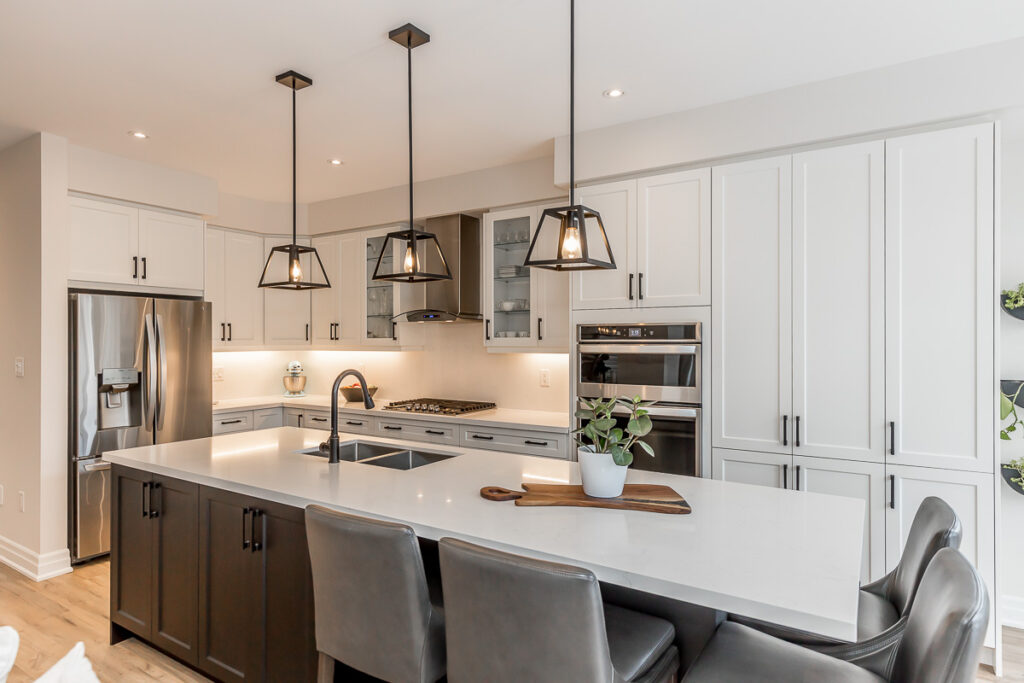
Storage optimization remains paramount as homeowners seek to maximize functionality within their available square footage. Floor-to-ceiling cabinetry creates visual impact while providing dramatically increased storage capacity. Walk-in and butler pantries allow homeowners to keep everyday cooking chaos hidden from gathering spaces. Islands packed with organizational features, including deep drawers, specialized dividers, and integrated recycling centers, transform kitchen islands from simple prep surfaces into comprehensive storage solutions.
The financial case for kitchen remodeling remains strong heading into 2026. With minor kitchen remodels now delivering some of the highest returns on investment among all home improvement projects, homeowners have solid justification for moving forward with spring renovations. Examining [Minor Kitchen Remodel ROI Hits 113%: Why Central PA Homeowners Are Choosing Strategic Upgrades in 2026] provides the specific numbers that inform smart renovation decisions and help homeowners understand which upgrades deliver the greatest value.
Generational Preferences Shape Project Priorities
The NKBA report offers valuable insights into generational preferences that influence project planning. Generation X and Baby Boomers hold the largest share of kitchen remodel projects at 35% and 32% respectively, while also spending the most on renovations at 90% and 71% of their respective generations. The drivers for remodels vary significantly: Millennials without children primarily seek more entertaining space at 35%, while Boomers desire more accessible kitchens at 31%.
Design feature preferences also vary by generation. Gen Z prioritizes smart and connected homes above other features. Millennials with children focus on multifunctional layouts for living. Millennials without children seek high-end convenience features. Gen X emphasizes smarter storage and decreased clutter. Boomers prioritize easy and healthy living features. Understanding these generational distinctions helps homeowners identify which features align with their household composition and lifestyle priorities.
The minimalism over maximalism trend identified in the report suggests that 60% of professionals expect simplified designs to dominate. Features like flat slab cabinet door styles at 69% popularity, panel-faced refrigeration at 72%, and slab solid surface backsplashes at 75% all reflect this preference for clean, uncluttered aesthetics. This shift away from ornate details and toward streamlined surfaces creates kitchens that photograph beautifully for eventual resale while providing calming environments for daily living.
Planning for Spring 2026 Projects
For Lancaster County homeowners planning spring 2026 kitchen projects, the industry data suggests several strategic approaches. First, prioritize timeless over trendy by selecting materials and designs with proven longevity rather than chasing social media inspiration that may quickly date. Second, invest meaningfully in lighting plans that address natural light, task lighting, and ambient illumination. Third, consider smart technology integration as a standard feature rather than an optional upgrade. Fourth, plan storage solutions that anticipate future needs rather than merely addressing current requirements.
The expanded kitchen footprint trend also suggests homeowners should evaluate whether their current kitchen layout maximizes available space. Converting adjacent pantries, underutilized breakfast nooks, or portions of formal dining rooms into kitchen square footage may deliver more impact than simply refreshing finishes within existing footprints. These spatial reconfigurations often require professional design assistance to ensure traffic flow, natural light, and storage needs are properly addressed.
Lancaster Kitchens and Baths: Your Central PA Kitchen Remodeling Partner
At Lancaster Kitchens and Baths, we have served Central Pennsylvania homeowners since 1986 with complete kitchen remodeling services. Our design-build approach ensures your renovation reflects both current best practices and timeless appeal that will serve your family for decades.
Our Full Kitchen Design Services:
- Kitchen Design and Remodeling – Complete kitchen transformations from concept through installation
Ready to Start Your Kitchen Project? Contact Lancaster Kitchens and Baths to schedule your design consultation and discover how 2026’s kitchen trends can transform your Lancaster County home.
Works Cited
“NKBA | KBIS Releases Annual 2026 Kitchen Trends Report.” National Kitchen & Bath Association, 18 Sept. 2025, nkba.org/press/nkba-kbis-releases-annual-2026-kitchen-trends-report/. Accessed 20 Dec. 2025.
“Remodeling Market Poised for Growth in 2025.” National Association of Home Builders, 25 Feb. 2025, www.nahb.org/news-and-economics/press-releases/2025/02/remodeling-market-poised-for-growth-in-2025. Accessed 20 Dec. 2025.
Related Articles
- [Natural Wood and Quartzite: The Material Shift Transforming Central PA Kitchens in 2026]
- [Minor Kitchen Remodel ROI Hits 113%: Why Central PA Homeowners Are Choosing Strategic Upgrades in 2026]