
Lancaster Kitchens & Baths: Expert Bathroom Design and Remodeling in Lancaster County, PA
The American bathroom is getting bigger, brighter, and smarter. The National Kitchen & Bath Association’s 2026 Bath Trends Report—built on survey data from nearly 700 industry professionals including designers, remodelers, manufacturers, and architects—reveals a fundamental shift in how homeowners think about their most personal room. Bathrooms are no longer utilitarian afterthoughts. They are becoming wellness-centered spaces designed around individual rituals, and Lancaster County homeowners are following these national trends with a distinctly practical local sensibility.
The headline finding: 72 percent of industry professionals surveyed said the overall bathroom footprint will increase to accommodate wellness features, universal design, and better storage. Meanwhile, 89 percent identified space allocation in the primary bathroom as a top priority for homeowners. The report signals that 2026 bathroom remodels will look dramatically different from the builder-grade bathrooms that still dominate Lancaster County’s housing stock.
Showers Are Winning the Space War
The single most consequential trend for Lancaster County remodelers is the shift from bathtubs to larger showers. More than half of the NKBA’s respondents—55 percent—said a bigger shower is now more important to homeowners than having a bathtub. This preference is not just about aesthetics. Larger showers create room for spa-like features that were previously reserved for high-end custom homes: steam systems, aromatherapy, built-in seating, chromotherapy lighting, and multiple showerheads.
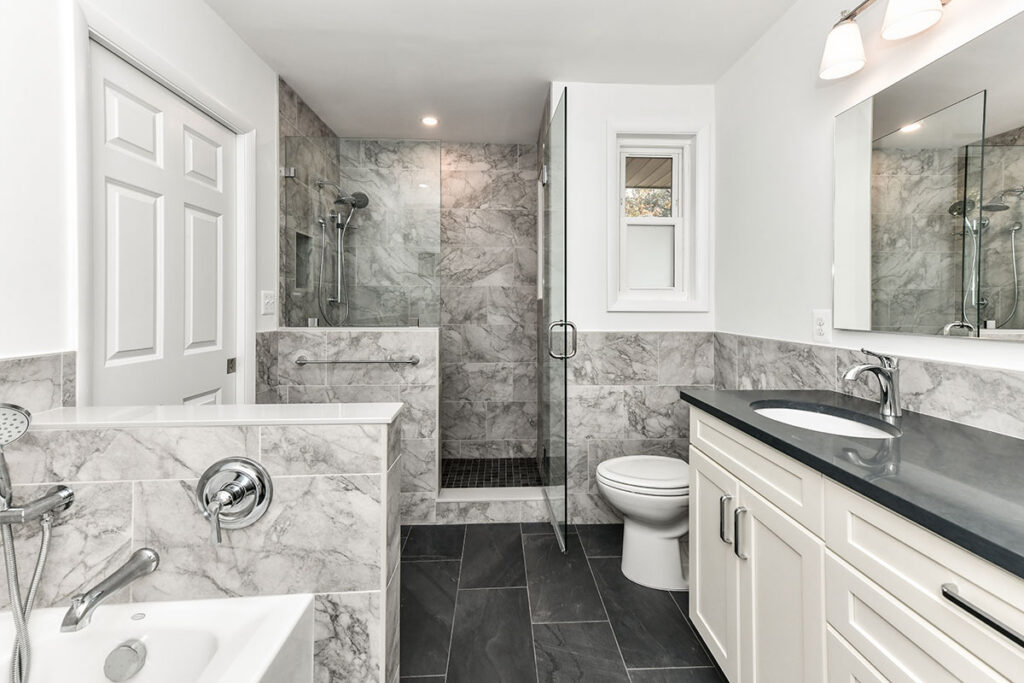
For homeowners in Ephrata, Lititz, and Mount Joy sitting on bathrooms with the standard five-foot tub-shower combination, this trend translates into a specific renovation strategy. Removing the tub and converting that footprint into a walk-in shower with a glass enclosure can transform a dated bathroom without changing the room’s overall dimensions. Adding a bench seat, a recessed niche for storage, and a handheld showerhead on a slide bar delivers daily luxury while simultaneously building in accessibility features that add long-term value.
The NKBA data also found that 77 percent of respondents expect homeowners to draw design inspiration from hotel and resort experiences. This hospitality influence shows up in the details: frameless glass, large-format tile with minimal grout lines, rainfall showerheads, and integrated shelving that replaces the plastic corner caddy. Lancaster County homeowners are requesting these features not because they are following trends for the sake of fashion, but because they have experienced these environments while traveling and want to replicate that feeling at home.
Understanding why bathrooms have overtaken kitchens as the nation’s most popular remodeling project provides important context for these design decisions. Bathroom Remodeling Leads the Nation’s Home Improvement Boom: What It Means for Lancaster County examines the financial and demographic forces making 2026 the year of the bathroom.
Water Efficiency Is Now a Design Feature
The wellness-focused bathroom of 2026 is not just about comfort—it is also about resource consciousness. As homeowners invest in upgraded showerheads, faucets, and toilets, many are discovering that modern fixtures deliver better performance while using significantly less water. The EPA’s WaterSense program has documented that WaterSense labeled showerheads use no more than 2.0 gallons per minute compared to the standard 2.5 gallons, and the average family could save 2,700 gallons per year by making the switch. Those water savings reduce demands on water heaters as well, translating to measurable energy cost reductions.
For Lancaster County homeowners planning a bathroom remodel, specifying WaterSense-certified fixtures is a straightforward way to lock in long-term savings without sacrificing the shower experience. The EPA’s testing criteria ensure that labeled showerheads meet specific standards for spray force and spray coverage, meaning water efficiency does not come at the cost of a weak, unsatisfying shower. When you are already replacing fixtures during a remodel, the incremental cost of choosing WaterSense models over conventional options is negligible—often zero, since most major manufacturers now offer certified products across their lines.
Lighting, Storage, and the Details That Matter
Lighting emerged as a dominant concern in the NKBA survey, with 91 percent of respondents calling it a top consideration in bathroom design. The data reveals specific priorities: 92 percent agree task lighting should always be included in the primary bath, 80 percent are incorporating nighttime-specific lighting, and 88 percent list natural lighting as a top priority. The trend toward layered lighting—combining task, ambient, and accent sources with dimming controls—reflects how homeowners use bathrooms differently throughout the day.
Storage is evolving with equal sophistication. The 2026 report highlights growing demand for configurable storage modules built into vanity cabinetry, with item-specific solutions for hair tools, makeup, medications, and even charging stations for electronic devices. This push toward purposeful storage represents a meaningful upgrade over the medicine cabinet and under-sink void that constitutes storage in most Lancaster County bathrooms built before 2000.
Color palettes are also shifting. The NKBA found near-unanimous agreement—96 percent—that neutrals dominate bathroom color choices, with off-white, light brown, and warm tan leading selections. Earthy greens, particularly sage and olive, are the most popular accent colors. This palette aligns well with Lancaster County’s architectural character, where farmhouse, colonial, and traditional home styles benefit from warm, grounded tones rather than stark contemporary whites.
Smart Technology Enters the Bathroom
Technology integration is accelerating in bathroom design, though it takes a different form than the smart kitchen. The NKBA identified three technology growth areas: AI-driven design inspiration among younger homeowners, smart fixture integration through intelligent showers, lighting, and energy systems, and health-oriented features including stress-reduction tools and wellness monitoring. Over half of survey respondents—51 percent—predict smart toilets will rise in popularity over the next three years, joining smart mirrors, digital shower controls, and integrated Bluetooth speakers as increasingly mainstream requests.
For Lancaster County homeowners evaluating these features, the practical advice is to plan the infrastructure during your remodel even if you are not ready to install smart fixtures immediately. Running additional electrical circuits, positioning outlets behind mirrors, and ensuring adequate WiFi coverage in the bathroom costs very little during construction but becomes expensive and disruptive to add later.
Materials and Style: What the Pros Are Specifying
The NKBA report confirms that transitional and timeless design remains the dominant bathroom style heading into 2026, followed by organic and natural aesthetics. For Lancaster County homeowners, this is welcome news—transitional design bridges traditional architecture with contemporary finishes, meaning your updated bathroom will complement rather than clash with the rest of your home.
Material selections reflect this balanced approach. Large-format tile continues as the top flooring choice, valued for its clean appearance and reduced grout lines that simplify maintenance. Natural textures are playing a larger role even when the materials themselves are engineered for performance. Wood-look tile, honed stone finishes, and fluted cabinetry details create warmth and visual interest without the maintenance demands of actual wood in a wet environment. Matte finishes are gaining ground over high-gloss, particularly for plumbing fixtures and hardware, because they feel warmer, resist fingerprints, and hide water spots better.
Patterned and textured tile is gaining prominence as well, with 66 percent of survey respondents noting growing homeowner interest. This trend shows up in accent walls, shower niches, and floor patterns that add personality without overwhelming the space. For a Lancaster County farmhouse bathroom, a hand-glazed zellige tile in an earthy tone can add character while respecting the home’s architectural roots. For a more contemporary Manheim Township home, geometric porcelain in soft neutrals delivers visual interest with clean lines.
Homeowners over fifty should pay particular attention to how smart technology intersects with accessibility. Understanding Why Lancaster County Homeowners Are Building Aging-in-Place Bathrooms Now—Not Later reveals how features like motion-activated nightlights, digital temperature controls, and touchless faucets serve both convenience and safety as households age.
Lancaster Kitchens & Baths: Your Bathroom Design Partner
Lancaster Kitchens & Baths helps homeowners translate national design trends into bathrooms that work for Lancaster County homes and lifestyles. Visit the LKB Home Center showroom in Landisville to see current tile, vanity, and fixture options in person—and work with our design team to build a plan that fits your space and budget.
Our Services Include:
- Bathroom Remodeling – Complete design, material selection, and installation for every bathroom style
- Expert coordination of plumbing, electrical, tile, and finish work under one project manager
Ready to Explore Your Options? Contact Lancaster Kitchens & Baths for a free design consultation. We will help you sort the trends worth investing in from the ones you can skip.
Works Cited
“NKBA | KBIS Releases Annual 2026 Bath Trends Report.” National Kitchen & Bath Association, 11 Nov. 2025, nkba.org/press/nkba-kbis-releases-annual-2026-bath-trends-report/. Accessed 17 Feb. 2026.
“Showerheads.” WaterSense, U.S. Environmental Protection Agency, www.epa.gov/watersense/showerheads. Accessed 17 Feb. 2026.
Related Articles
- Bathroom Remodeling Leads the Nation’s Home Improvement Boom: What It Means for Lancaster County
- Why Lancaster County Homeowners Are Building Aging-in-Place Bathrooms Now—Not Later