Lancaster Kitchens & Baths: Expert Bathroom Design and Remodeling in Lancaster County, PA
The bathroom is the most dangerous room in your house, and the data makes the case for acting now rather than waiting. The Centers for Disease Control and Prevention reports that over 14 million adults aged 65 and older—one in four—fall each year, with falls representing the leading cause of both fatal and nonfatal injuries in this age group. The fall death rate among older adults increased 41 percent between 2012 and 2021, and the financial toll reached an estimated eighty billion dollars in healthcare costs in 2020 alone. A disproportionate share of these falls happens in the bathroom, where wet surfaces, confined spaces, and the physical demands of getting in and out of tubs create a perfect storm of risk factors.
For Lancaster County homeowners in their forties, fifties, and early sixties, these statistics are not abstract. They describe what happens to parents, in-laws, and eventually to themselves in homes that were never designed for aging bodies. The question is not whether to address bathroom accessibility but when—and the answer, both financially and practically, is during a planned remodel rather than as an emergency response after a fall.
The Economics of Proactive Design
Installing aging-in-place features during a bathroom remodel costs a fraction of retrofitting them later. A curbless shower entry, for example, requires specific floor framing and drain positioning that is straightforward to accomplish when the bathroom is already stripped to studs during a renovation. Adding it after the fact means tearing out a finished floor, modifying the subfloor, reworking the drain, and reinstalling everything—easily tripling or quadrupling the cost of the same feature incorporated during initial construction.
The same economics apply across nearly every accessibility modification. Blocking behind drywall for future grab bar installation adds minimal cost during a remodel but avoids the need to open finished walls later. Widening a doorway from thirty inches to thirty-six inches is a simple framing adjustment during renovation but a significant project once the bathroom is complete. Comfort-height toilets, lever-handle faucets, and handheld showerheads on slide bars cost no more than their standard counterparts when specified during the fixture selection process.
This cost math explains why the remodeling industry is seeing accessibility features move from specialized request to mainstream expectation. Understanding the broader forces driving bathroom renovations nationally helps contextualize this shift. Bathroom Remodeling Leads the Nation’s Home Improvement Boom: What It Means for Lancaster County examines why bathrooms have become America’s number-one remodeling project and the financial conditions making 2026 a strategic time to invest.
What “Aging in Place” Actually Looks Like in 2026
The aging-in-place bathroom of 2026 looks nothing like the institutional, clinical spaces the term once conjured. According to the National Council on Aging, falls are the leading cause of fatal and nonfatal injuries for older Americans, with non-fatal fall costs totaling approximately eighty billion dollars in 2020 healthcare spending. The response from the design industry has been to integrate safety features so seamlessly into modern aesthetics that they enhance rather than compromise the look of the finished bathroom.
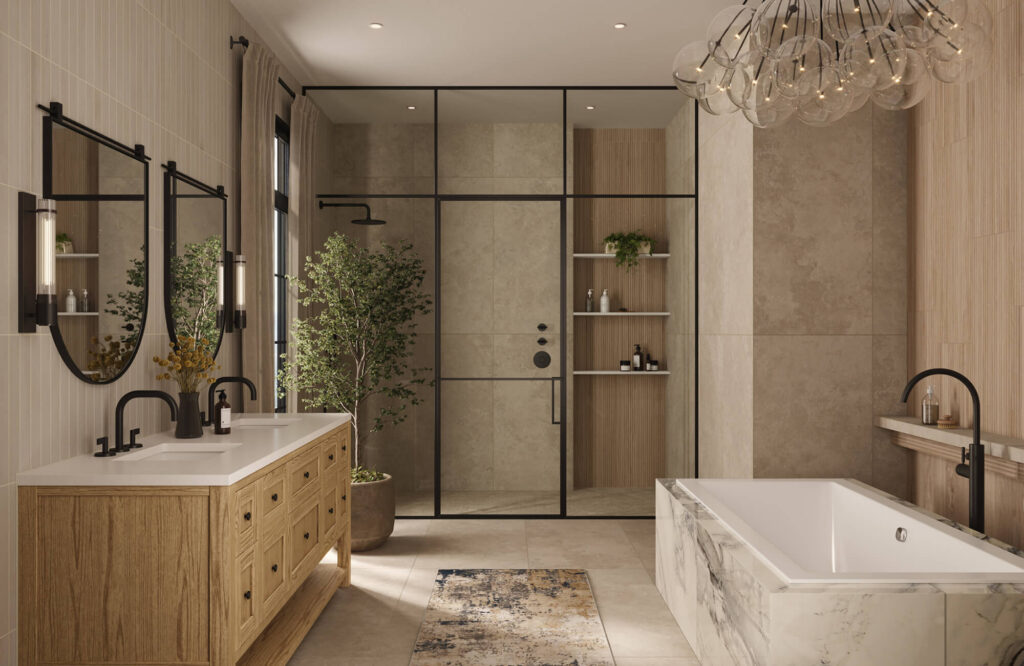
Grab bars now come in decorative finishes—matte black, brushed gold, polished nickel—that match contemporary hardware. Linear drain systems enable completely flat, curbless shower floors that read as high-end design rather than medical accommodation. Bench seats built into shower walls serve as both a luxury feature for shaving legs or relaxing under a rainfall showerhead and a critical safety element for anyone with balance or mobility concerns. Comfort-height toilets, which sit seventeen to nineteen inches off the floor compared to the standard fifteen inches, are now the default specification in most new construction precisely because they are easier for people of all ages and abilities to use.
The National Kitchen & Bath Association’s 2026 Bath Trends Report found that 32 percent of industry professionals now consider aging-in-place design mainstream, with an additional 48 percent saying it is on its way to becoming so. That means 80 percent of the industry recognizes that accessibility is no longer a niche concern—it is a baseline expectation for quality bathroom design. Features like curbless showers, barrier-free entries, wider doors, and integrated seating are being specified not just for households with current mobility needs but for every homeowner who plans to stay in their home for the next decade or more.
Lancaster County’s Specific Opportunity
Lancaster County’s demographics make the aging-in-place bathroom particularly relevant. The region’s strong community ties and relatively affordable housing stock mean many residents plan to remain in their homes long-term rather than relocating to retirement communities. A family in Manheim Township that purchased their colonial in the 1990s is now approaching their sixties in a home with original bathrooms featuring step-over tub entries, narrow doorways, and inadequate lighting—exactly the conditions that contribute to bathroom falls.
Pennsylvania’s housing stock compounds the issue. Homes built before the Americans with Disabilities Act became law in 1990 were constructed with no accessibility considerations whatsoever. Bathroom doorways are typically thirty inches or narrower. Tub-shower combinations require stepping over a fourteen-to-sixteen-inch barrier. Tile floors offer limited slip resistance when wet. And lighting often consists of a single overhead fixture that creates shadows in the very areas where good visibility matters most.
The opportunity for Lancaster County homeowners is to address these deficiencies during a planned remodel that also delivers the aesthetic and comfort upgrades they want. A homeowner who was already considering replacing a dated bathroom can incorporate every major accessibility feature—curbless shower, blocking for grab bars, wider doorway, comfort-height toilet, improved lighting, slip-resistant flooring—within the same project timeline and with only modest additional cost. The bathroom they get back is both more beautiful and fundamentally safer.
The design features driving this evolution are detailed in The 2026 Bathroom Trends That Are Reshaping Lancaster County Remodels, where the latest industry data shows how spa-like showers, smart technology, and wellness-centered design intersect naturally with accessibility goals.
Making the Case to Your Household
One of the most common barriers to aging-in-place bathroom design is resistance from the homeowner themselves. Nobody wants to think about falling. Nobody wants to admit that the tub they have stepped into for twenty years might become a hazard. The conversation is easier when framed around design quality rather than disability accommodation.
A curbless shower with frameless glass is a luxury feature that happens to eliminate a trip hazard. A handheld showerhead on a slide bar is a spa convenience that happens to work for someone seated. A comfort-height toilet is simply more comfortable for anyone over five-foot-six. Lever faucet handles are easier to operate for everyone, including someone with wet, soapy hands. Nighttime-specific lighting on motion sensors prevents the stumbling that comes from navigating a dark bathroom at 3 AM at any age.
When every accessibility feature also functions as a genuine design upgrade, the conversation shifts from “we need to prepare for getting old” to “we are building the best bathroom we can.” That reframing makes the investment feel aspirational rather than defensive—and it produces a bathroom that serves the household beautifully for decades regardless of what physical changes the future brings.
Lancaster Kitchens & Baths: Your Aging-in-Place Bathroom Partner
Lancaster Kitchens & Baths designs bathrooms that serve homeowners today and for years to come. Our team understands how to integrate accessibility features seamlessly into beautiful, modern bathroom designs—because the best safety features are the ones you actually want in your home. Visit our LKB Home Center showroom to see curbless shower systems, comfort-height fixtures, and accessible design solutions in person.
Our Services Include:
- Bathroom Remodeling – Complete design and installation including accessibility-focused renovations for every stage of life
- Expert coordination of structural modifications, plumbing, electrical, and finish work
Ready to Build a Bathroom That Lasts? Contact Lancaster Kitchens & Baths for a free design consultation. We will help you plan a bathroom that is as safe as it is stunning.
Works Cited
“Facts About Falls.” Older Adult Fall Prevention, Centers for Disease Control and Prevention, www.cdc.gov/falls/data-research/facts-stats/index.html. Accessed 17 Feb. 2026.
“Get the Facts on Falls Prevention.” National Council on Aging, www.ncoa.org/article/get-the-facts-on-falls-prevention/. Accessed 17 Feb. 2026.