
Lancaster Kitchen & Baths: Design and Remodeling Experts in Lancaster County
Across Lancaster County, a growing number of homeowners are arriving at the same conclusion: the kitchen they want is not in a different house — it is hiding inside the one they already own. Elevated mortgage rates, historically tight housing inventory, and the substantial transaction costs of buying and selling have made moving an increasingly expensive proposition. For families whose primary frustration is an outdated, cramped, or dysfunctional kitchen, investing in a remodel delivers a transformed living experience without the financial disruption of uprooting to a new property.
This is not just anecdotal sentiment. The remodeling industry is tracking its strongest sustained period in years. The National Association of Home Builders released its fourth-quarter 2025 Remodeling Market Index showing a reading of 64, up four points from the previous quarter, with all components firmly in positive territory above the critical 50 threshold. NAHB Chief Economist Robert Dietz stated that the reading supports a forecast of continued moderate growth in remodeling activity through 2026, driven by an aging housing stock, strong homeowner equity, and increasing need for aging-in-place improvements. The Current Conditions Index for large remodeling projects of fifty thousand dollars or more rose five points to 69, reflecting robust demand at exactly the price level where most comprehensive kitchen renovations fall.
Harvard University’s Joint Center for Housing Studies has projected that total homeowner remodeling spending will reach a record 524 billion dollars in early 2026, even as growth rates moderate from pandemic-era highs. The combination of homes getting older, homeowners staying in place longer, and equity positions remaining strong creates a foundation for sustained remodeling demand that extends well beyond any single economic cycle.
The Math Behind Remodeling vs. Moving
The financial case for remodeling over relocating has rarely been stronger. Homeowners who locked in mortgage rates below four percent during 2020 and 2021 face a powerful disincentive to move — taking on a new mortgage at current rates above six percent would increase their monthly housing costs by hundreds or even thousands of dollars before they gain a single square foot or a single design improvement. This rate lock-in effect has kept existing home inventory historically low, which in turn pushes prices higher for the limited supply that is available.
Consider the total transaction cost of selling a home and purchasing a new one. Real estate commissions, closing costs, moving expenses, and the inevitable repairs and updates that even a newer home requires can easily consume 8 to 12 percent of a home’s value. For a Lancaster County homeowner in a four-hundred-thousand-dollar home, that represents thirty-two to forty-eight thousand dollars spent on the process of moving alone — money that produces no improvement in daily living quality.
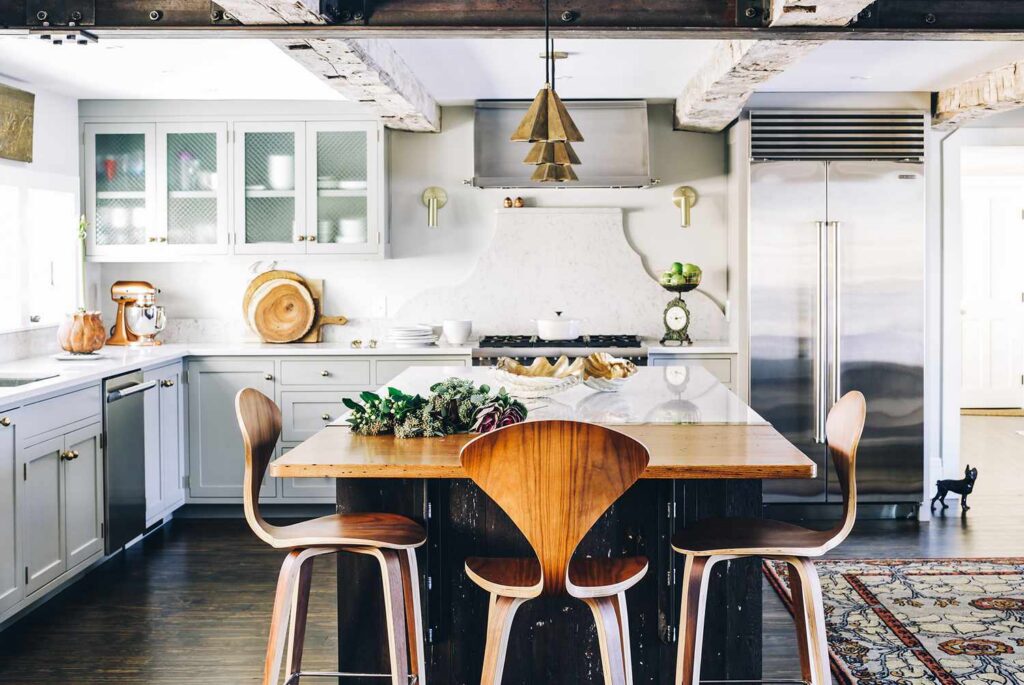
By contrast, that same investment directed toward a kitchen remodel transforms the room a family uses most into a space that matches how they actually cook, entertain, and gather. A well-executed mid-range kitchen renovation delivers daily improvements in workflow, storage, and aesthetics that homeowners experience every single morning when they make coffee and every evening when they prepare dinner. The kitchen is where homework happens, where holiday meals are prepared, and where families reconnect at the end of long days. Improving this space improves the quality of every day spent in the home.
The return on investment numbers support this logic as well. Industry data from the 2025 Cost vs. Value Report consistently shows that minor kitchen remodels recoup over 100 percent of their cost in increased home value, making the kitchen one of the only renovation categories where homeowners can actually come out ahead financially. Major mid-range renovations typically return 50 to 80 percent, which still compares favorably to the pure loss of transaction costs associated with buying and selling. Even in a scenario where a homeowner eventually sells years later, the kitchen investment holds and often appreciates, particularly in desirable Lancaster County neighborhoods where buyers expect updated kitchens as standard.
Understanding how current tariff pressures are shaping project costs helps homeowners time their remodel strategically. Reviewing How New Tariffs Are Driving Up Kitchen Remodeling Costs for Lancaster County Homeowners provides the budget context needed to plan a project that captures today’s pricing before potential further increases take effect.
Lancaster County’s Housing Stock Demands Renovation
Lancaster County’s housing stock tells a story of decades-old construction meeting modern expectations. A significant portion of homes throughout the county were built between the 1940s and 1980s, an era when kitchen design reflected very different assumptions about how families used the space. Kitchens from this period tend to be walled off from living areas, built around inefficient layouts, and equipped with electrical and plumbing systems that cannot support contemporary appliances and fixtures.
These older homes are fundamentally sound — they sit on solid foundations, occupy established neighborhoods with mature trees and walkable streets, and carry the charm and character that mass-produced new construction rarely matches. What they lack is a kitchen that reflects how families live today. Opening a galley kitchen to a family room, adding an island for prep and gathering, upgrading electrical service to handle modern cooking appliances, and installing adequate lighting are renovations that make these homes fully competitive with new construction at a fraction of the cost of buying new.
The condition of Lancaster County’s housing stock also explains why the remodeling market remains resilient even as new construction slows. Homes built forty, fifty, or sixty years ago inevitably need their kitchens updated, not because of cosmetic preference but because systems wear out, layouts become impractical, and the gap between how families lived then and how they live now becomes too wide to bridge with minor fixes. Appliances fail, countertops deteriorate, and cabinets that have endured decades of daily use eventually reach the end of their functional life. These replacement-driven remodels happen regardless of economic conditions, providing a baseline of demand that sustains the industry through market cycles.
The NAHB reported in January 2026 that the tariff increase on kitchen cabinets and vanities originally scheduled for January 1, 2026 has been delayed by one year, keeping the current 25 percent rate in place through at least January 2027. While this delay provides temporary relief, the organization continues to advocate for exempting building materials from tariff strategies entirely, noting that the tariffs raise construction costs, impede supply chains, and place upward pressure on home prices. For homeowners who have been considering a kitchen remodel, the delay creates a strategic window to finalize plans and lock in pricing before the market faces potential additional cost pressure.
The Emotional Equation Matters Too
Financial analysis tells only part of the story. Homeowners who choose to remodel rather than move preserve relationships with neighbors, maintain children’s school enrollment continuity, keep established commuting patterns, and avoid the sheer logistical exhaustion of packing, staging, showing, and relocating an entire household. For families with deep roots in Lancaster County communities — and this region is defined by its community ties — staying put carries value that no spreadsheet can quantify.
There is also the matter of control. When you remodel your kitchen, you choose every material, every layout decision, and every finish. When you buy a different home, you inherit someone else’s choices and often find yourself planning renovations to that new kitchen anyway. Remodelers frequently report that clients who initially considered moving ultimately realized they would have spent more and gotten less by purchasing a different home.
The kitchen trends shaping 2026 are particularly well suited to renovation rather than new construction, because they emphasize working smarter within existing footprints rather than building bigger. Exploring The 2026 Kitchen Design Trends Transforming Lancaster County Homes shows how design professionals are helping homeowners maximize function, beauty, and long-term value within the four walls they already own.
Lancaster Kitchen & Baths: Your Partner in Kitchen Remodeling
Lancaster Kitchen & Baths has helped hundreds of Lancaster County families transform their kitchens into spaces they love — without the cost and disruption of moving. Our NKBA certified designers specialize in reimagining existing spaces to deliver modern function, beautiful aesthetics, and lasting value.
Our Services Include:
- Kitchen Remodeling — Full design-build renovations that turn outdated kitchens into the heart of your home, on time and on budget
- LKB Home Center Showroom — An immersive selection experience where homeowners and contractors can explore cabinetry, countertops, fixtures, and finishes with expert guidance
Ready to Love Your Kitchen Again? Contact Lancaster Kitchen & Baths to schedule your free consultation and discover what’s possible in your current home.
Works Cited
“Remodeling Market Sentiment Strengthens in Fourth Quarter of 2025.” National Association of Home Builders, 17 Jan. 2026, www.nahb.org/news-and-economics/press-releases/2026/01/remodeling-market-sentiment-strengthens-in-fourth-quarter-of-2025. Accessed 17 Feb. 2026.
“Trump Delays Higher Tariffs on Furniture, Kitchen Cabinets for One Year.” National Association of Home Builders, 2 Jan. 2026, www.nahb.org/blog/2026/01/wood-product-tariff-delays. Accessed 17 Feb. 2026.
Related Articles
- How New Tariffs Are Driving Up Kitchen Remodeling Costs for Lancaster County Homeowners
- The 2026 Kitchen Design Trends Transforming Lancaster County Homes