Lancaster Kitchens & Baths | Lancaster County, PA
The bathroom has quietly become the most rethought room in the American home, and summer 2026 is where several years of slow change come together into a clear new look. Across Lancaster County—from Lititz master baths to Mount Joy family bathrooms—homeowners are no longer asking for a simple fixture swap. They want a room that works harder, feels calmer, and looks more like a boutique hotel than the utilitarian space it used to be. The result is a season of remodeling defined less by a single color or finish than by a shift in what a bathroom is for.
That shift is showing up in the numbers as well as the showrooms. The remodeling market remains near record levels, with the Harvard Joint Center’s Leading Indicator of Remodeling Activity projecting homeowner improvement spending around $520 billion through 2026, and bathrooms are among the projects homeowners prioritize because they pay back in daily comfort long before resale. The trends below are what that spending is buying in Lancaster County this summer.
Bigger Showers, Often Instead of the Tub
The single clearest trend is the rise of the large, open shower—frequently at the expense of a second tub. Industry data backs up what local homeowners are requesting: in the NKBA 2026 Bath Trends Report, a majority of designers said a larger shower size now matters more to clients than having a bathtub, and the overall bathroom footprint is expanding to make room for it. Frameless glass, bench seating, and curbless entries make these showers feel open and spa-like rather than boxed in. Lancaster County homeowners with two tubs increasingly convert at least one bath to a generous walk-in shower.
This is a big enough movement to deserve its own discussion. The shift toward curbless, wet-room-style showers—and what it takes to build one correctly—is covered in [PLACEHOLDER: Curbless Walk-In Showers and Wet Rooms — The 2026 Shower Trend in Lancaster County], which looks at waterproofing, drainage, and the accessibility payoff in detail.
The Spa Bathroom Goes Mainstream
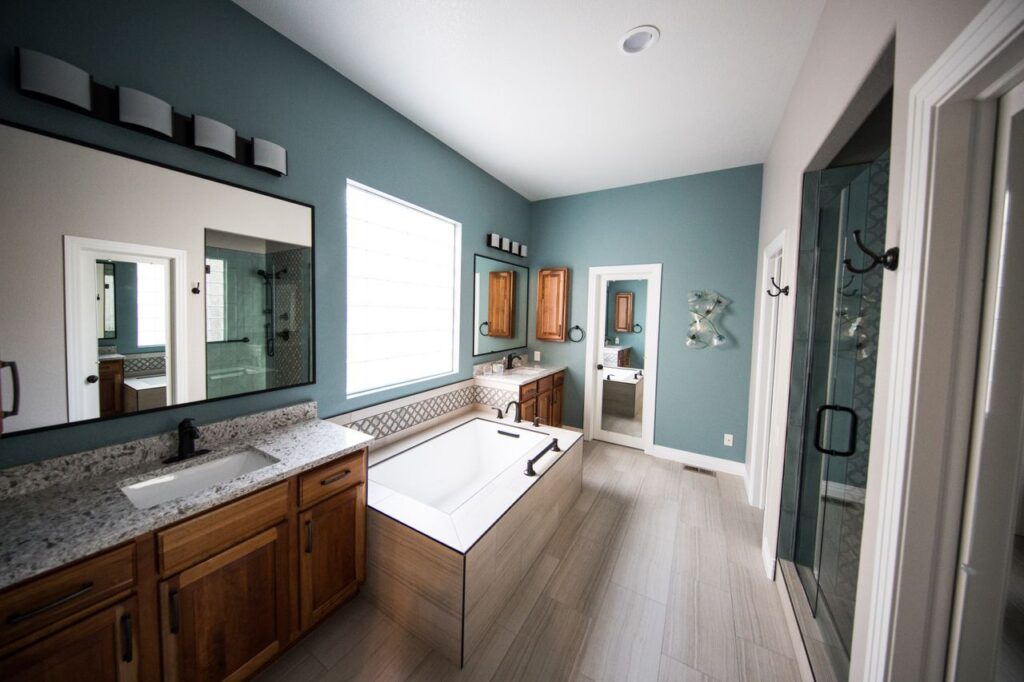
If one idea ties summer 2026 together, it is wellness. Homeowners want the primary bath to feel like a personal spa: heated tile floors underfoot, steam and rainfall shower options, soaking tubs positioned as a focal point, and lighting that can shift from bright morning task light to a warm evening glow. Smart features are part of the same story, with smart toilets, programmable showers, and integrated lighting moving from novelty to expectation. The look is calm and natural—warm woods, stone-look tile, and soft, organic textures rather than the stark all-white bathrooms of the last decade.
These wellness and technology upgrades carry practical considerations around water and energy use, which is why the spa side of the trend gets its own treatment in [PLACEHOLDER: Spa Bathroom Trends for Summer 2026 — Heated Floors, Smart Toilets, and Wellness Features]. For most homeowners, the appeal is simple: the bathroom becomes a place to decompress, not just get ready.
Double Vanities, Smart Storage, and Warm Finishes
Storage and the vanity are where day-to-day function lives, and both are getting more attention. Double vanities remain a top request in primary baths, and the storage inside them is becoming smarter—drawer organizers for grooming tools, built-in outlets and charging stations, and dedicated spots for everyday items so the countertop stays clear. Floating vanities make small bathrooms feel larger and simplify cleaning, a meaningful advantage in Lancaster’s older and historic homes where square footage is tight.
On finishes, the cool chrome-and-gray palette is giving way to warmth. Brushed gold, champagne bronze, and matte black fixtures are the fixtures of the moment, usually set against neutral, nature-inspired backgrounds with patterned or textured tile providing the visual interest. The effect is a bathroom that feels current without being trendy in a way that will look dated in five years—an important balance for homeowners investing in a space they plan to keep.
Aging in Place, Designed to Look Good
One of the most significant shifts is that accessibility has lost its clinical look. Features that support aging in place—curbless shower entries, bench seating, grab bars, and wider doorways—are now designed to read as luxurious and intentional rather than medical. For Lancaster County’s many multigenerational households and homeowners planning to stay in place, this means a bathroom can be both beautiful and genuinely future-proof. The same remodel that looks like a high-end spa today quietly removes the barriers that force people out of their homes later.
Taken together, the summer 2026 trends point in one direction: the bathroom as a deliberate, comfortable, lasting space rather than an afterthought. The homeowners getting the most from these trends are the ones planning the whole room—layout, fixtures, storage, lighting, and finishes—rather than chasing individual features one at a time.
Planning a Trend-Smart Remodel in an Older Home
Much of Lancaster County’s housing stock predates the open, spa-style bathroom these trends assume, and that is where planning earns its keep. Historic Lancaster city homes, Ephrata farmhouses, and mid-century houses in Manheim Township often have tight bathroom footprints, original plumbing stacks in awkward locations, and floor structures that were never designed for heavy tile or a curbless shower. The trends are absolutely achievable in these homes—but only when the design starts from what the house actually allows rather than from a showroom photo.
The practical move is to separate the features that are easy to add from the ones that require opening walls or floors. Swapping fixtures, updating a vanity, changing lighting, and retiling are relatively contained. Relocating plumbing, recessing a floor for a curbless entry, or expanding the footprint into an adjacent closet are bigger structural decisions that are far cheaper to make once, up front, than to revisit later. Sequencing those choices correctly is the difference between a remodel that stays on budget and one that uncovers expensive surprises midway through.
This is also where working with a single team that coordinates every trade pays off. A bathroom remodel touches demolition, plumbing, electrical, ventilation, waterproofing, tile, and finish carpentry, and the trends for 2026—bigger showers, heated floors, smart fixtures—add more trades and more dependencies, not fewer. When one project manager owns the schedule and the sequence, the heated-floor mat is ready before the tile crew arrives and the electrician has roughed in the smart-toilet outlet before the walls close. That coordination is invisible when it works and painfully obvious when it doesn’t.
Lancaster Kitchens & Baths: Your Lancaster County Bathroom Remodeling Partner
Lancaster Kitchens & Baths has redesigned and remodeled hundreds of homes across Lancaster County, and our LKB Home Center showroom lets you see and compare today’s trending vanities, tile, fixtures, and finishes in person before you commit.
Our Bathroom Remodeling Services Include:
- Bathroom Design & Remodeling — Full-service design and installation, with one project manager coordinating every trade
- Bathroom Vanities — Single and double vanities sized and styled to fit your space and storage needs
- Plumbing Fixtures — Showers, tubs, faucets, and smart fixtures selected and installed with licensed pros
Ready to plan your project? Contact Lancaster Kitchens & Baths for a free in-home consultation and a clear scope and budget for your Lancaster County bathroom.
Frequently Asked Questions
What are the biggest bathroom trends for summer 2026?
Larger walk-in showers (often replacing a second tub), spa and wellness features like heated floors and steam, double vanities with smart storage, and warm metal finishes such as brushed gold and matte black. Accessibility features designed to look luxurious—curbless entries, benches, grab bars—are also moving into the mainstream.
Are people still installing bathtubs in 2026?
Yes, but selectively. Freestanding soaking tubs are popular as a spa focal point in primary baths, while many homeowners with more than one bathroom convert a second tub to a large walk-in shower. Industry surveys show a majority of designers now report clients valuing a bigger shower over having a tub in the primary bath.
How much does a trend-forward bathroom remodel cost in Lancaster County?
Bathroom remodels in the Lancaster area typically range from around $12,000 for a guest bath refresh to $65,000 or more for a full primary bath renovation. Walk-in showers, custom tile, double vanities, and smart fixtures push costs higher. A free in-home consultation gives you the most accurate scope and budget for your project.
Do these bathroom upgrades add home value?
A well-designed bathroom remodel typically returns a meaningful share of its cost at resale—commonly in the 60 to 70 percent range—while improving daily comfort immediately. Updated bathrooms are one of the features buyers evaluate most closely, so the upgrade pays back both before and at sale.
Works Cited
“NKBA | KBIS Releases Annual 2026 Bath Trends Report.” National Kitchen & Bath Association, Nov. 2025, nkba.org/press/nkba-kbis-releases-annual-2026-bath-trends-report/. Accessed 15 June 2026.
“Leading Indicator of Remodeling Activity (LIRA).” Joint Center for Housing Studies of Harvard University, www.jchs.harvard.edu/research-areas/remodeling/lira. Accessed 15 June 2026.