
Lancaster Kitchens & Baths | Lancaster County, PA
The biggest idea in bathroom design right now is not a color or a fixture—it is a feeling. Homeowners want the primary bath to function like a personal spa, a place to decompress at the end of the day rather than just a room to get ready in. For summer 2026, that means heated tile floors, steam and rainfall showers, freestanding soaking tubs, smart toilets, and lighting that shifts with the time of day. Across Lancaster County, the spa bathroom has moved from aspirational magazine spread to a realistic remodel goal.
The trend is well documented. Industry trend research for 2026 finds that a large majority of designers expect homeowners to incorporate hotel- and resort-inspired wellness features, and that smart toilets and other connected fixtures are expected to keep rising in popularity. What used to be a luxury upgrade is becoming a baseline expectation in primary bath renovations.
Heated Floors and the Comfort Upgrades People Love Most
Ask anyone who has installed radiant heated tile floors and they tend to say the same thing: it is the upgrade they would never give up. Stepping onto a warm floor on a cold Lancaster County morning is a small daily luxury that costs relatively little to add during a remodel, because the heating mat goes in while the floor is already being tiled. Heated floors pair naturally with the stone-look porcelain and large-format tile that define the current spa aesthetic, and they take the chill off a room that tile would otherwise make cold.
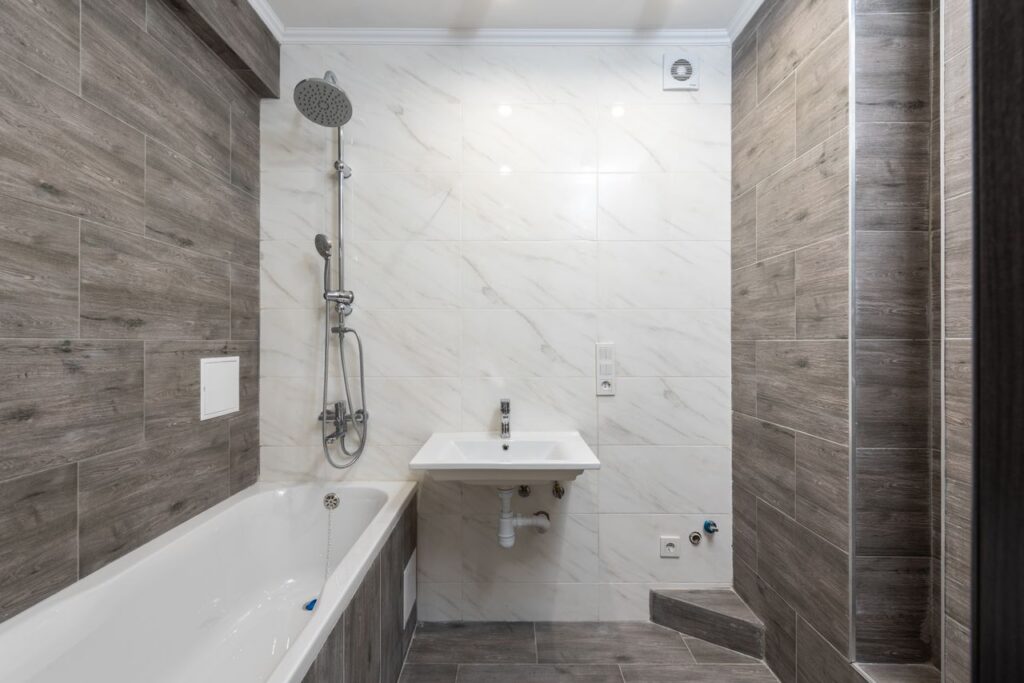
The rest of the comfort menu follows the same logic of small, sensory upgrades. Towel warmers, dimmable and color-tunable lighting, fog-free mirrors, and built-in shower niches all add to the spa feeling without requiring a larger footprint. The shower itself is often the centerpiece, with rainfall heads, body sprays, and steam options turning a daily routine into something closer to a treatment. None of these features individually is dramatic; together they change how the room feels to use.
Smart Fixtures: Convenience With a Plumbing Reality
Smart technology is the fastest-growing part of the spa bathroom. Smart toilets with heated seats, bidet functions, and automatic lids lead the category, followed by programmable showers that start at a set temperature and digital controls that remember each user’s preferences. These features deliver real everyday convenience, and they increasingly look like ordinary high-end fixtures rather than gadgets.
The practical caveat is infrastructure. Many smart toilets and digital showers need a nearby electrical outlet and sometimes additional plumbing or higher water pressure, which is far easier to add during a remodel than after. Soaking tubs, steam showers, and rainfall heads also increase hot-water demand, and water heating is no small line item—the U.S. Department of Energy notes that water heating accounts for about 18 percent of a typical home’s energy use. Planning the electrical, plumbing, and water-heating capacity up front is what keeps a spa bathroom from outrunning the systems that feed it. The right plumbing fixtures and a properly sized water heater are part of the design, not an afterthought.
Wellness, Water, and Sustainability Together
Today’s spa bathroom is also a more efficient one, which matters because comfort features add load. Soaking tubs, steam showers, and rainfall heads all increase hot-water demand, and space and water heating together account for the majority of U.S. home energy use. The smart move is to chase comfort and efficiency at the same time—sizing the water heater correctly and choosing water-efficient fixtures—rather than trading one for the other.
That balance—spa-level comfort that is also efficient and built to last—is the throughline of the season’s design thinking, and it connects to the broader trends in [PLACEHOLDER: Summer 2026 Bathroom Remodeling Trends in Lancaster County]. The shower is often where wellness and water use intersect most directly, which is why the open, curbless shower covered in [PLACEHOLDER: Curbless Walk-In Showers and Wet Rooms — The 2026 Shower Trend in Lancaster County] pairs so naturally with the spa features here. Good bathroom lighting ties the whole experience together, shifting from bright and functional in the morning to soft and restful at night.
The homeowners who get the most from the spa trend treat it as a coordinated system rather than a shopping list. Heated floors, a steam shower, a smart toilet, efficient fixtures, and layered lighting feel cohesive when they are planned together and disjointed when they are added piecemeal. Designed as a whole, the result is a bathroom that genuinely feels like an escape—and runs efficiently enough that the escape doesn’t show up as a shock on the utility bill.
Lighting and Sound: The Quiet Half of the Spa Experience
Ask a hotel designer what makes a bathroom feel like a spa and lighting comes up before any fixture. The spa bathrooms homeowners are requesting for 2026 use layered lighting rather than a single overhead fixture: bright, even task lighting at the mirror for grooming, softer ambient light for the room, and warm accent or toe-kick lighting for evenings. Dimmable and color-tunable LEDs let the same room shift from an energizing morning space to a calm, low-lit retreat at night, which is a large part of what makes the room feel restorative rather than merely functional.
Placement matters as much as the fixtures. Lighting at the mirror works best when it sits beside the face rather than directly overhead, which casts shadows; sconces or vertical fixtures flanking the mirror give the even, flattering light people associate with a hotel. Recessed lights on a separate dimmer handle the room, and a discreet light inside a shower niche or under a floating vanity adds the gentle glow that reads as luxurious. None of this requires a larger room—only a plan that treats lighting as a layered system designed before the walls close.
Sound and the small sensory details round out the experience. Built-in or moisture-rated speakers, a comfortable bench, hooks and niches placed where they are actually reached, and a fog-free mirror all contribute to a bathroom that feels considered. These finishing touches cost relatively little compared to the major fixtures, but they are what separate a bathroom that merely contains spa features from one that genuinely feels like an escape. Planned together with the heated floors, smart fixtures, and efficient water systems, they complete a room designed around how it feels to use, not just how it looks.
Lancaster Kitchens & Baths: Your Lancaster County Bathroom Remodeling Partner
Lancaster Kitchens & Baths coordinates the plumbing, electrical, and finish work that spa features require—heated floors, steam showers, smart fixtures, and efficient water systems—so your wellness bathroom is planned as one cohesive, well-supported space.
Our Bathroom Remodeling Services Include:
- Bathroom Design & Remodeling — Full-service design and installation, with one project manager coordinating every trade
- Bathroom Vanities — Single and double vanities sized and styled to fit your space and storage needs
- Plumbing Fixtures — Showers, tubs, faucets, and smart fixtures selected and installed with licensed pros
Ready to plan your project? Contact Lancaster Kitchens & Baths for a free in-home consultation and a clear scope and budget for your Lancaster County bathroom.
Frequently Asked Questions
Are heated bathroom floors worth it?
Most homeowners who install them say yes. Radiant heated tile floors add a daily comfort that is hard to give up, and they are most economical to install during a remodel because the heating element goes in while the floor is already being tiled. They pair well with the stone-look and large-format tile common in spa-style bathrooms and take the chill off an otherwise cold surface.
Do smart toilets and digital showers need special wiring or plumbing?
Often, yes. Many smart toilets need a nearby electrical outlet for heated seats and bidet functions, and digital or programmable showers may require additional plumbing or adequate water pressure. These are far easier and cheaper to add during a remodel than afterward, so it is best to plan the electrical and plumbing for smart fixtures from the start.
Will spa features like steam showers and soaking tubs raise my utility bills?
They increase hot-water demand, and water heating already accounts for roughly 18 percent of a typical home’s energy use. The way to enjoy spa features without a utility shock is to size the water heater correctly and pair indulgent fixtures with water-efficient, WaterSense-labeled showerheads and faucets, which conserve water and the energy used to heat it while still performing well.
Can I add spa features to a small bathroom?
Yes. Many wellness upgrades—heated floors, a smart toilet, a rainfall showerhead, dimmable lighting, a towel warmer, and a fog-free mirror—need no extra square footage. The key is planning them together so the small space feels cohesive and uncluttered rather than crowded, and choosing efficient fixtures that keep operating costs in check.
Works Cited
“Water Heating.” U.S. Department of Energy, Energy Saver, www.energy.gov/energysaver/water-heating. Accessed 15 June 2026.
“Space Heating and Water Heating Account for Nearly Two Thirds of U.S. Home Energy Use.” U.S. Energy Information Administration, www.eia.gov/todayinenergy/detail.php?id=37433. Accessed 15 June 2026.