
Lancaster Kitchens & Baths | Serving Lancaster County and Surrounding Communities
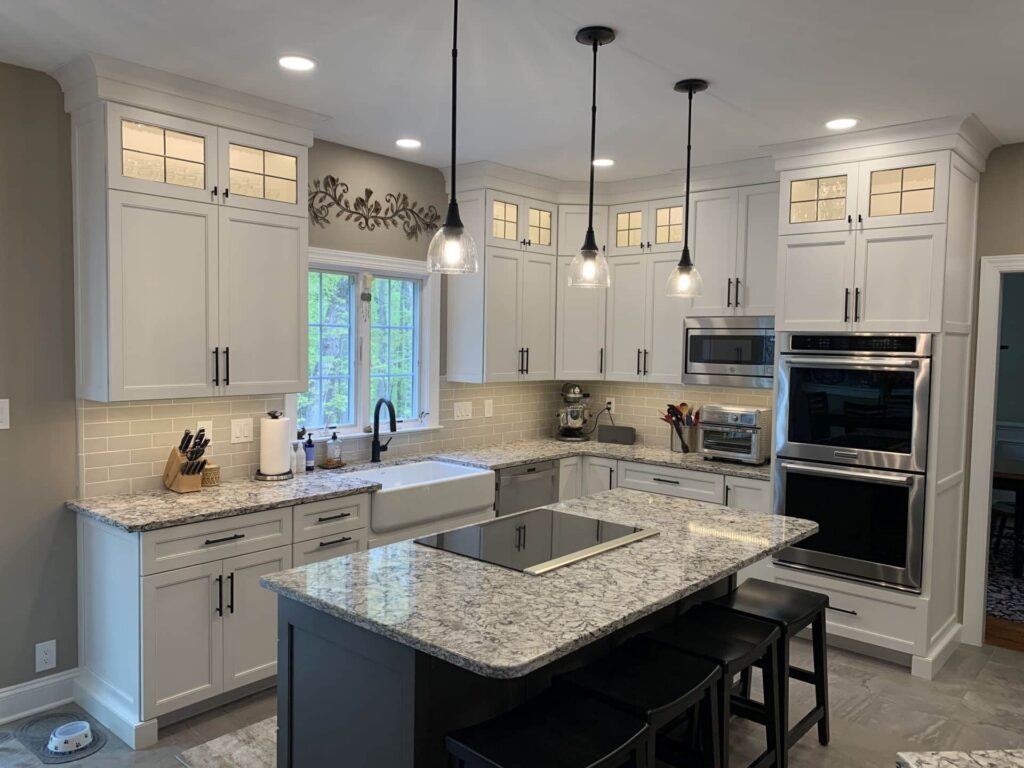
Your kitchen cabinets are not just storage. They are the structural and visual backbone of your entire kitchen — the element that defines how the room looks from every angle, determines how efficiently you cook and clean, and sets the practical ceiling on what every other component of the remodel can accomplish. Get the cabinets right and the rest of the kitchen falls into place. Get them wrong and no amount of beautiful countertops or premium appliances can compensate for storage that does not work, doors that do not close cleanly, or a layout that fights you every single day.
The National Kitchen and Bath Association’s 2026 Kitchen Trends Report — drawn from 634 industry professionals across North America — confirms that kitchen remodeling is entering a period defined by personalization, functionality, and multigenerational design. Gen X and Boomer homeowners, who together drive the largest share of kitchen remodeling activity, are increasingly investing in kitchens that work for how they actually live: better storage access, aging-in-place features, and spaces that serve both daily cooking and entertaining without compromise. Those priorities are not satisfied by standard layouts and off-the-shelf configurations. They are satisfied by thoughtful design, the right cabinet grade for the specific space, and installation executed by experienced craftsmen who understand how every element connects.
For homeowners in Lancaster City, Lititz, Ephrata, Mount Joy, Manheim Township, and throughout Lancaster County, those priorities are exactly what a professional cabinet installation project addresses — and why getting the process right from the beginning matters so much more than most homeowners realize when they start planning.
Why Cabinets Consume the Biggest Portion of Your Remodel Budget — and Why That Is Appropriate
Kitchen cabinets typically represent 30 to 40 percent of total kitchen remodel costs. For a mid-range kitchen remodel with a budget in the $25,000 to $50,000 range, that means $7,500 to $20,000 or more allocated to cabinetry — materials, hardware, and installation combined. That proportion surprises homeowners who think of countertops or appliances as the most expensive components, but it reflects the reality of what cabinets actually are: custom-fitted, permanently installed architectural elements that shape the room’s structure, storage capacity, and daily function for the next twenty years.
The allocation also reflects what is at stake when the selection or installation is handled poorly. Cabinets that are not matched to the layout waste space. Cabinets ordered at the wrong grade — too basic for a kitchen that gets heavy daily use, or priced beyond what the project requires — either underperform or overrun the budget. And cabinets that are installed without precision produce the problems Lancaster County homeowners consistently describe when they call us after a project that did not go as planned: doors that are not level, drawers that bind, sections that do not align cleanly at the joints, and reveals that are inconsistent from one cabinet to the next.
The Houzz 2026 Kitchen Trends Study found that among homeowners spending $50,000 or more on a kitchen remodel, 98 percent hire at least one professional — and cabinetmakers are among the most commonly engaged specialists at that level. That figure reflects something homeowners at higher investment levels already understand: the complexity of a complete kitchen cabinet project, from measuring and design through ordering and installation, is significant enough that the margin for error is effectively zero, and professional involvement is not an added cost but a risk mitigation strategy.
The Full Scope of What a Cabinet Installation Project Involves
Most homeowners begin a cabinet project thinking about the product — the specific door style, finish, and hardware that will define the look they want. That is the enjoyable part of the conversation, and it matters. But the cabinet product is only as good as the design that determines its layout and the installation that executes that layout precisely in the specific context of your kitchen.
The layout design is where the majority of functional outcomes are determined before a single cabinet is ordered. A well-designed cabinet layout accounts for the kitchen’s work triangle — the relationship between the sink, range, and refrigerator — and places storage where it actually supports how you cook rather than where it simply fills available wall space. It addresses the corners, which in most kitchens represent the most challenging and most commonly wasted storage zone. It accounts for appliance clearances so that cabinet doors do not conflict with refrigerator doors, dishwasher access, or oven handle clearance when the kitchen is in use. And it coordinates cabinet dimensions with countertop overhang, toe kick heights, and ceiling conditions so that the finished installation looks intentional and architecturally complete rather than assembled from components that happen to fit.
The design also produces the technical documentation — detailed elevations and 3D renderings — that allows homeowners to visualize the finished kitchen before anything is ordered and gives the installation team a precise reference for every measurement, position, and coordinate. That documentation is the quality control checkpoint that catches dimension conflicts, clearance issues, and coordination problems before they become expensive field corrections during installation. Without it, the project relies on assumptions that only become visible when cabinets are being installed, at which point options are limited and costs are high.
For a complete picture of how cabinet grade selection shapes everything from budget to long-term performance, Stock, Semi-Custom, or Custom: Which Kitchen Cabinet Grade Is Right for Your Lancaster County Home? provides the framework for making that decision with full understanding of what each tier delivers and where each is the right choice.
What Coordination Between Cabinets and the Rest of the Project Requires
Kitchen cabinet installation does not happen in isolation. The cabinets must coordinate with countertop installation — the counter height, edge profile, and overhang dimensions all depend on finished cabinet dimensions being exactly what they were designed to be. Lighting placement, particularly under-cabinet task lighting, is determined by cabinet upper box dimensions and the wall cabinet positioning relative to the countertop below. Flooring installation sequence matters: in most projects, base cabinets are set before flooring is installed to that level, which means the installation team needs to account for the flooring material’s finished height when establishing cabinet height.
These coordination requirements are not complex when a single company manages the full project and its subcomponents communicate with each other. They become problematic when a homeowner sources cabinets from one supplier, contracts installation separately, and coordinates countertops through a third party — a common pattern that produces the misalignment and schedule conflict issues that drive project overruns.
The NKBA’s research on demographic drivers for kitchen remodeling confirms that today’s homeowners increasingly prioritize projects that deliver better functionality for multi-generational living and long-term accessibility. Those priorities — pullout cabinet storage, soft-close hardware throughout, thoughtful placement of specialty storage for specific cookware and small appliances — require a design team that asks the right questions about how the kitchen will actually be used and translates those answers into layout decisions that a standard catalog selection process never reaches.
As examined in The Real Cost of Getting Kitchen Cabinet Installation Wrong in Lancaster County — and How to Avoid It, the downstream consequences of poor installation quality or mismanaged coordination extend well beyond the initial project and into the years of daily kitchen use that follow.
What the Lancaster County Market Means for Your Project Specifically
Lancaster County’s housing stock creates a particular set of cabinet installation challenges that generic advice does not address. Historic row homes and farmhouses in Lancaster City, Lititz, and Ephrata frequently have walls that are not plumb, floors that have settled unevenly, and ceiling heights that vary across a kitchen’s run — all conditions that require professional assessment and installation technique to handle correctly. A cabinet layout designed on paper against a standard room assumes square corners and level surfaces that many local homes simply do not have.
Split-level and ranch-style homes in Manheim Township and Mount Joy often present different challenges: layouts where the kitchen opens to adjacent living spaces, sight lines that make the cabinet aesthetic visible from multiple rooms, and ceiling conditions that affect whether stacked uppers, crown molding, or open shelving above the standard cabinet height is the right finishing approach for the specific space.
New construction and renovation projects throughout the county’s suburban corridors offer the most straightforward conditions for cabinet installation — but also the context where the selection decision between stock, semi-custom, and custom most directly determines the final level of fit and finish quality. Builders’ standard cabinet specifications in Lancaster County new construction are frequently stock-grade products installed to a budget that prioritizes completion speed over quality. Homeowners who upgrade from the builder standard have the opportunity to transform the kitchen into the home’s most functional and visually finished space — but only if the upgrade is executed with the design discipline and installation precision the improvement deserves.
Lancaster Kitchens & Baths: Your Partner in Kitchen Cabinet Installation
Lancaster Kitchens & Baths brings NKBA-accredited design expertise and experienced professional installation to kitchen cabinet projects throughout Lancaster County and surrounding communities.
Our Services Include:
- Kitchen Cabinet Installation — Cabinet selection guidance, detailed design with 3D renderings, professional installation, and full coordination with countertops, lighting, and flooring
- Full Kitchen Design & Remodeling — Complete kitchen transformations managed from initial consultation through final installation
Ready to Start Your Kitchen Cabinet Project? Contact Lancaster Kitchens & Baths to schedule your free consultation and see our full cabinet displays at the LKB Home Center showroom.
Works Cited
“NKBA | KBIS Releases Annual 2026 Kitchen Trends Report.” National Kitchen & Bath Association, Sept. 2025, nkba.org/press/nkba-kbis-releases-annual-2026-kitchen-trends-report/. Accessed 26 Mar. 2026.
“10 Kitchen Remodeling Trends to Know for 2026.” Houzz, 2026, www.houzz.com/magazine/10-kitchen-remodeling-trends-to-know-for-2026-stsetivw-vs~184007085. Accessed 26 Mar. 2026.
Related Articles
- Stock, Semi-Custom, or Custom: Which Kitchen Cabinet Grade Is Right for Your Lancaster County Home?
- The Real Cost of Getting Kitchen Cabinet Installation Wrong in Lancaster County — and How to Avoid It