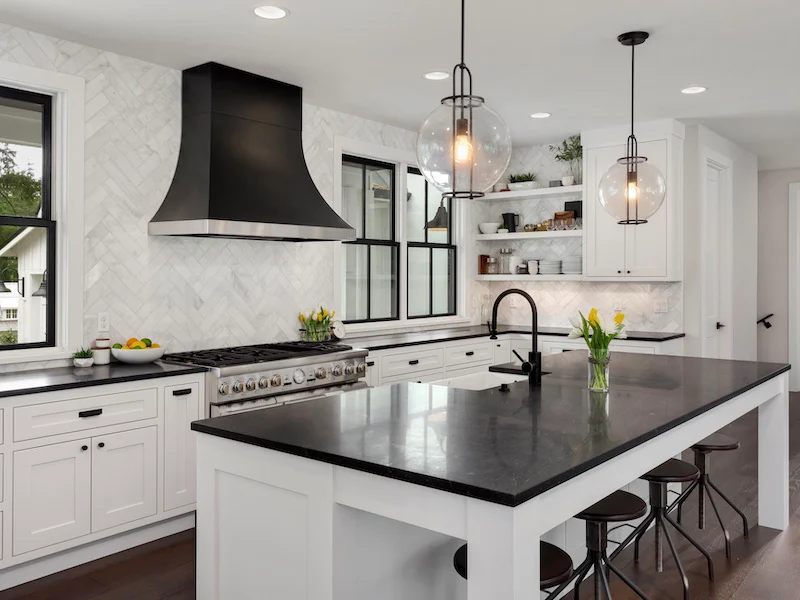
Your countertop is the most-used surface in your kitchen. It takes the heat from cast iron, the scratches from knives, the stains from red wine, and the judgment of every guest who walks in. Choosing the wrong material means years of frustration. Getting it right means a kitchen that holds up and still looks sharp a decade from now.
This guide covers every major countertop material – what it actually costs in Lancaster County, how it performs in real PA kitchens, and which homes it suits best. No manufacturer marketing. Just an honest breakdown to help you make the right call before you spend the money.
Why Countertop Material Selection Matters More in Lancaster County
Lancaster County homes are not all the same. You have historic farmhouses in Lititz and Strasburg, mid-century ranches in Manheim Township, newer builds in Elizabethtown and Mount Joy, and everything in between. At Lancaster Kitchens and Baths, we’ve installed countertops across all of these home styles – and the right material for a farmhouse kitchen with thick timber beams is rarely the right choice for a bright, modern galley in East Hempfield Township.
Beyond style, Central PA’s climate plays a role most people overlook. We get humid summers and cold, dry winters – that seasonal moisture swing affects porous natural stone more than homeowners realize. Granite and quartz handle Pennsylvania weather well. Marble and butcher block require more intentional maintenance if you want them to last.
One more practical point: countertop choice directly affects your home’s resale value. In Central PA’s real estate market, neutral tones in granite and quartz – whites, light grays, subtle veining – consistently perform best at resale. Bold or trendy colors in marble and concrete can polarize buyers.
Kitchen Countertop Materials: A Practical Comparison
Granite Countertops
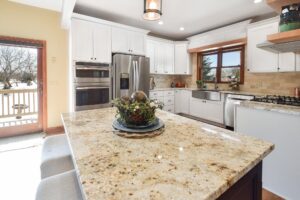
Granite is a natural stone quarried in large slabs. No two slabs are identical, which is either a feature or a problem depending on how you think about design consistency. The variation is what makes granite kitchens look genuinely high-end – each surface has its own character.
How it performs: Granite is heat-resistant, which matters in an active cooking kitchen. You can set a hot pan directly on it without damaging the surface. It’s also scratch-resistant under normal use. The main maintenance requirement is annual sealing – a 20-minute process that keeps the stone from absorbing stains.
What it costs in Lancaster County: Granite countertop installation in Lancaster, PA typically runs $45–$90 per square foot installed, including material and labor. Premium slabs, rare color patterns, and complex edge profiles push toward the higher end.
Best fit: Granite works especially well in farmhouse-style homes, traditional kitchens, and older Lancaster County properties where the natural, one-of-a-kind look fits the architecture. If you cook heavily and want heat resistance without the worry, granite is a strong choice. If you cook heavily and want heat resistance without the worry, granite is a strong choice. Still deciding? Read our detailed breakdown of whether granite countertops are right for your kitchen.
Where it falls short: Granite needs periodic sealing. Skip it, and the stone can absorb oil, wine, or acidic liquids. It’s also heavier than engineered surfaces, so cabinet support matters during installation.
Quartz Countertops
Quartz is the most requested countertop material in Lancaster County right now, and that’s not a coincidence. It’s engineered – typically 93–95% crushed quartz crystals bound with 5–7% resin – which means it’s non-porous, never needs sealing, and comes in a controlled range of colors and patterns.
How it performs: Quartz resists stains, bacteria, and moisture better than any natural stone. It won’t absorb spills if you leave them sitting overnight. The tradeoff is heat – unlike granite, quartz can be damaged by sustained direct heat from hot pots. Always use trivets. It can also discolor in direct, prolonged UV exposure, so south-facing kitchens with large windows need that consideration.
What it costs in Lancaster County: Quartz countertop installation typically runs $55–$100 per square foot installed in Lancaster, PA. Cambria and Silestone sit at the premium end; builder-grade engineered quartz starts lower.
Best fit: Quartz is the top choice for busy family kitchens, households with kids, and homeowners who want a low-maintenance surface that holds up over years without annual upkeep. It’s also the strongest choice for resale — buyers in Central PA respond well to white and gray quartz.
Where it falls short: Quartz lacks the natural variation of granite. If you want a truly unique stone look, you won’t find it in quartz – every slab is consistent by design.
Quartzite Countertops
Quartzite is the material that confuses the most homeowners. It is not quartz. It is a natural metamorphic stone – sandstone that has been compressed under extreme heat and pressure over millions of years – and it looks remarkably like marble while performing far closer to granite.
How it performs: Quartzite is harder than granite, highly heat-resistant, and significantly less porous than marble. It does still require sealing, but it won’t etch from acidic foods the way marble does. The visual result – dramatic natural veining in whites and grays – gives you the marble aesthetic without marble’s maintenance burden. For a deeper look at how quartzite performs in PA homes, see our guide to natural quartzite countertops in Pennsylvania.
What it costs in Lancaster County: Quartzite typically runs $60–$120 per square foot installed, depending on the slab and rarity of the stone.
Best fit: Design-focused homeowners who want the marble look in a high-use kitchen. Quartzite is also an excellent island surface where visual impact matters as much as function.
Where it falls short: Availability is more limited than granite or quartz – not every fabricator carries a strong quartzite selection. And like granite, it requires periodic sealing.
Marble Countertops
Marble is the countertop material that sells on aesthetics and requires the most honest conversation about practical reality. The look is hard to match – the luminous white surface and natural veining of Calacatta or Carrara marble genuinely elevates a kitchen. The maintenance reality is different.
How it performs: Marble is a relatively soft, porous stone. It etches – meaning acidic substances like lemon juice, vinegar, and tomato sauce leave a dull mark on the surface that is not a stain but a surface-level chemical reaction. It also stains if spills aren’t cleaned promptly. Sealing helps but doesn’t eliminate these risks.
What it costs in Lancaster County: Marble countertop installation in Lancaster, PA runs $60–$120 per square foot installed at the entry level for Carrara, climbing higher for Calacatta and rare veining patterns.
Best fit: Marble works best in lower-traffic applications — a kitchen island used for display, a baking counter that sees little acidic food contact, or an upscale kitchen where the homeowner accepts the patina as part of the material’s character. Many Lancaster homeowners pair marble on the island with quartz or granite on the perimeter counters.
Where it falls short: Marble is not forgiving in a busy family kitchen. If you cook daily with acidic ingredients and don’t want to think about coasters and immediate cleanup, choose a different material.
Butcher Block Countertops
Butcher block brings warmth and texture that no stone surface can replicate. It’s solid hardwood – typically maple, walnut, or oak – and it integrates into farmhouse, transitional, and cottage-style kitchens in a way that feels intentional rather than trendy.
How it performs: Butcher block is functional as a prep surface – it’s easier on knife edges than stone and can be sanded and re-oiled if it gets damaged. The tradeoffs are real: it’s vulnerable to standing water, requires regular mineral oil treatment (every few months initially, then annually), and will show wear over time. Heat damage is a real risk – always use trivets. The tradeoffs are real: it’s vulnerable to standing water, requires regular mineral oil treatment, and will show wear over time. See our full guide on how to care for butcher block countertops to understand what that maintenance routine looks like in practice.
What it costs in Lancaster County: Butcher block typically runs $30–$80 per square foot installed, making it the most budget-friendly natural-material option.
Best fit: Kitchen islands or secondary prep areas, particularly in farmhouse-style Lancaster homes. Pairing butcher block on an island with granite or quartz on the perimeter is a popular choice – you get warmth and character without compromising the main work surface.
Where it falls short: Butcher block should not be the primary countertop surface in a kitchen with heavy daily use, young children, or frequent water exposure near the sink.
Head-to-Head Comparison: Lancaster County’s Top Four Materials
| Granite | Quartz | Quartzite | Marble | |
|---|---|---|---|---|
| Durability | Very high | Very high | Highest | Moderate |
| Heat Resistance | Excellent | Use trivets | Excellent | Moderate |
| Stain Resistance | Good (sealed) | Excellent | Good (sealed) | Low |
| Maintenance | Annual sealing | None | Annual sealing | Frequent sealing |
| Installed Cost (Lancaster, PA) | $45–$90/sq ft | $55–$100/sq ft | $60–$120/sq ft | $60–$120/sq ft |
| Resale Value | High | High | High | Medium–High |
| Best For | Farmhouse, traditional kitchens | Busy families, modern kitchens | Design-focused, marble look | Low-traffic, luxury aesthetic |
| Sealing Required | Yes | No | Yes | Yes |
How to Choose the Right Countertop for Your Lancaster Home
After installing hundreds of countertops across Lancaster County, the decision almost always comes down to three honest questions:
1. How do you actually use your kitchen?
If you cook daily, have kids, and want zero maintenance overhead – quartz. If you love to cook, want natural stone, and don’t mind one sealing session per year – granite. If you want the marble look in a high-use kitchen – quartzite.
2. What is your kitchen’s design language?
Farmhouse and traditional interiors in Lancaster County’s older homes suit granite and butcher block. Modern and transitional kitchens in newer East Hempfield Township and Manheim Township builds suit quartz. High-end, design-forward renovations where the countertop is the focal point suit quartzite or marble (on the island).
3. What is your realistic budget?
Butcher block gives you the best material for the least money. Granite sits in the mid-range and delivers proven ROI. Quartz costs slightly more but eliminates maintenance costs over the life of the countertop. Quartzite and marble are premium investments that make sense when design is the primary driver.
If you’re still deciding, the kitchen remodeling process at LKB includes a free consultation where we walk through material samples before anything is committed – this is covered in more detail below.
Countertop Colors That Perform Best in Central PA Real Estate
If resale value is part of your calculus – and in Lancaster County’s competitive housing market, it should be – neutral tones consistently outperform bold choices. White and light gray quartz (think Calacatta-inspired veining or solid surfaces like Silestone Blanco Zeus) appeal to the broadest buyer pool. For granite, Kashmir White, Colonial White, and Alaska White have strong track records in Central PA home sales. Avoid trendy dark veining or high-contrast slabs if you’re planning to sell within five years. Avoid trendy dark veining or high-contrast slabs if you’re planning to sell within five years. For the full picture on what remodeling investments return in Central PA, read our breakdown of kitchen remodel ROI in Pennsylvania.
What to Expect From the Countertop Installation Process
Most homeowners underestimate how smooth a professional countertop installation runs when the groundwork is done right. Here’s what the process looks like:
Step 1 — Consultation and material selection. This is where you review actual slabs (not catalog photos), discuss how your kitchen gets used, and settle on the material, edge profile, and color. Edge profiles – eased, beveled, ogee, waterfall – have a bigger visual impact than most homeowners expect before they see them in person.
Step 2 — Measurement and templating. A precise digital template is taken of your existing countertop footprint. Accuracy here determines whether seams land correctly and whether cutouts for sinks and cooktops are clean.
Step 3 — Fabrication. The slab is cut and finished by a stone fabricator. Lead times vary by material – standard granite and quartz typically run 1–2 weeks; rare quartzite slabs take longer if they need to be sourced.
Step 4 — Installation. Most Lancaster County kitchen countertop installations are completed within 1-2 days once materials are in hand. The counters are set, leveled, and secured. Sink and cooktop cutouts are sealed.
Step 5 — Final inspection. Seams, edges, cutouts, and overhangs are checked. For granite and quartzite, a first sealing coat is applied.
For granite and quartzite, a first sealing coat is applied. Want to see how these installations come together? Browse our before and after photos of Lancaster County kitchen projects.
Pairing your countertop replacement with a kitchen cabinets installation or kitchen flooring project is worth considering if you’re already opening up the kitchen – the scheduling efficiencies reduce overall project cost and disruption.
What Does Kitchen Countertop Installation Cost in Lancaster, PA?
Most homeowners in Lancaster County spend between $3,000 and $10,000 for a full kitchen countertop installation. The range is wide because it depends on three things: the material you choose, the total square footage of your countertop run, and the edge profile and fabrication complexity.
A straightforward 40-square-foot granite installation with an eased edge sits toward the lower end of that range. A quartzite island with a waterfall edge and mitered corners sits toward the top. The kitchen countertop installation page breaks down per-material pricing in detail if you want to run preliminary numbers before your consultation.
As a full-service kitchen remodeling contractor serving Lancaster County, Lancaster Kitchens and Baths brings licensed expertise, local material knowledge, and project experience from hundreds of Central PA kitchens. If you’re ready to talk through your countertop options, contact us for a free consultation — no pressure, no commitment, just an honest conversation about what works for your kitchen and your budget.
Frequently Asked Questions: Kitchen Countertops in Lancaster, PA
What is the most durable kitchen countertop material?
Quartzite and granite are the most durable natural stone options. Quartzite is technically harder than granite and highly heat-resistant. Quartz (engineered stone) is comparably durable and adds stain and bacteria resistance, making it the most practical choice for high-use family kitchens in Lancaster County.
Is quartz or granite better for a Lancaster kitchen?
It depends on your priorities. Quartz requires zero maintenance, resists stains without sealing, and works best in busy households. Granite offers a unique natural look, superior heat resistance, and tends to suit farmhouse and traditional-style homes common throughout Lancaster County. For most families, quartz wins on practicality; for homeowners who want natural stone and cook heavily, granite is the stronger choice.
What countertop material performs best in Pennsylvania’s climate?
Quartz and granite handle Central PA’s humidity swings and temperature changes best. Both are non-reactive to seasonal moisture variation. Marble and butcher block require more intentional care in Pennsylvania’s climate – marble because humidity accelerates staining risk, butcher block because moisture causes warping and cracking if the wood isn’t properly oiled and sealed.
How much does countertop installation cost in Lancaster, PA?
Most Lancaster County homeowners spend $3,000-$10,000 for a full kitchen installation. Per square foot: granite runs $45-$90 installed, quartz $55-$100, marble and quartzite $60-$120. Laminate starts around $20-$40 per square foot for budget remodels.
How often does granite need to be sealed?
Granite countertops in Lancaster, PA should be sealed once a year under normal use. High-traffic kitchens – daily cooking, frequent spills – benefit from sealing every six months. The process takes 20-30 minutes and uses a penetrating stone sealer available at any home improvement store.
Does quartz countertop need to be sealed?
No. Quartz is non-porous by its engineered nature. It does not require sealing at installation or at any point during its life. This is one of the primary reasons quartz has become the most requested countertop material in Lancaster County.
What is the difference between quartz and quartzite?
Quartz is an engineered material – crushed quartz crystals mixed with resin, manufactured in consistent colors and patterns. Quartzite is a natural metamorphic stone formed from sandstone under extreme heat and pressure. Quartzite looks like marble (dramatic veining, natural variation) but performs closer to granite (harder, more heat-resistant, less prone to etching). The confusion between the two is common – always confirm which material you’re being quoted on.
Is marble a practical choice for a Lancaster kitchen?
Marble is not recommended as the primary countertop surface for high-use family kitchens. It etches from acidic foods and requires frequent sealing. That said, marble works well as a low-traffic island surface, a baking counter, or in a design-forward kitchen where the homeowner accepts the natural patina as part of the material’s character. Many Lancaster homeowners use marble on the island and quartz or granite on the perimeter.
How long does countertop installation take?
Most Lancaster County kitchen countertop installations are completed in one to two days once materials are ready. Fabrication and templating typically take one to two weeks beforehand, depending on the material and fabricator lead times. Rare quartzite slabs that need to be sourced can extend the timeline.
Do kitchen countertops increase home resale value in Pennsylvania?
Yes. Granite and quartz consistently add measurable resale value in Central PA’s real estate market. Neutral tones – whites, light grays, and subtle veining — perform best with buyers. Marble can add value in high-end listings but may limit buyer appeal in mid-market homes. Butcher block adds warmth but is rarely cited as a value driver in Pennsylvania home appraisals.
What countertop edge profile should I choose?
Edge profile is a design decision that affects both aesthetics and cost. An eased edge (simple 90-degree with slightly softened corner) is the most budget-friendly and works in modern kitchens. A beveled or bullnose edge suits traditional styles. An ogee edge adds formality and visual detail. Waterfall edges – where the slab continues vertically down the cabinet side – are a popular premium upgrade in contemporary Lancaster County remodels.
Can I install countertops without replacing cabinets?
Yes. Countertop replacement is one of the most common standalone upgrades in Lancaster County kitchens. As long as the existing cabinet boxes are structurally sound and level, new countertops can be templated and installed without touching the cabinet frames. It’s one of the highest-impact, lowest-disruption kitchen updates available.