
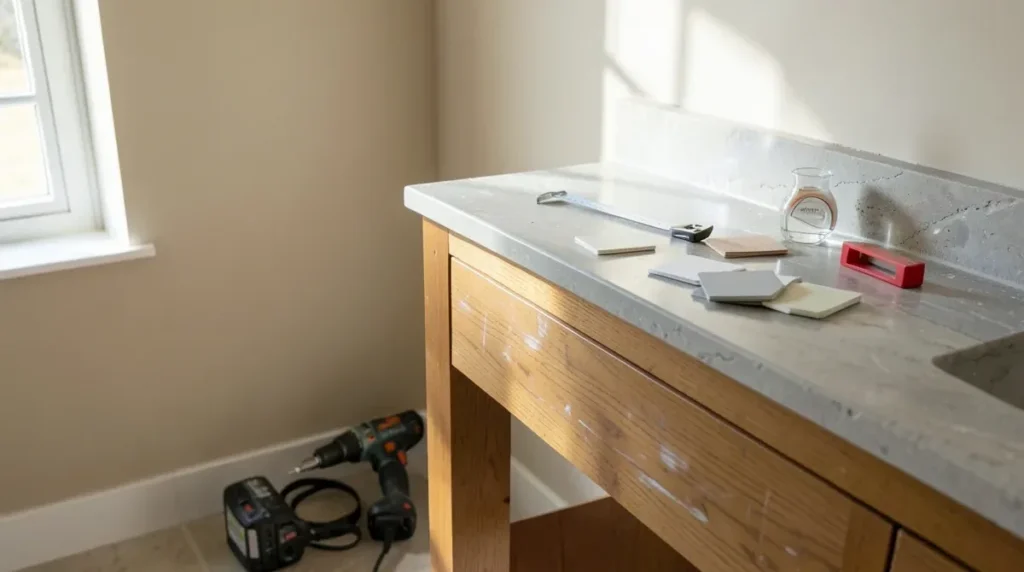
Do-it-yourself home improvement is not going anywhere. What has changed is which projects people are willing to take on themselves. Lancaster Kitchens and Baths is a design-build kitchen and bathroom remodeling contractor serving Lancaster County, Pennsylvania, with a showroom in Landisville where clients select materials. New research shows a clear shift on larger work, and kitchens and bathrooms sit right at the center of it.
Three Decades of Movement in One Direction
The trend is not recent, and it is not small.
An analysis published on 21 September 2026 by the Joint Center for Housing Studies at Harvard University tracked nearly thirty years of home improvement spending. Do-it-yourself work accounted for 23.8 percent of improvement spending in 1995. By 2023 it had fallen to 15.9 percent.
Both categories grew in that time. Adjusted for inflation, do-it-yourself spending rose 55 percent between 1995 and 2023. Professionally installed spending rose 157 percent over the same period.
The gap widened further after the pandemic. Between 2021 and 2023, real spending on professionally installed work rose 14 percent while do-it-yourself spending fell 13 percent.
The Shift Is Sharpest on the Work We Do
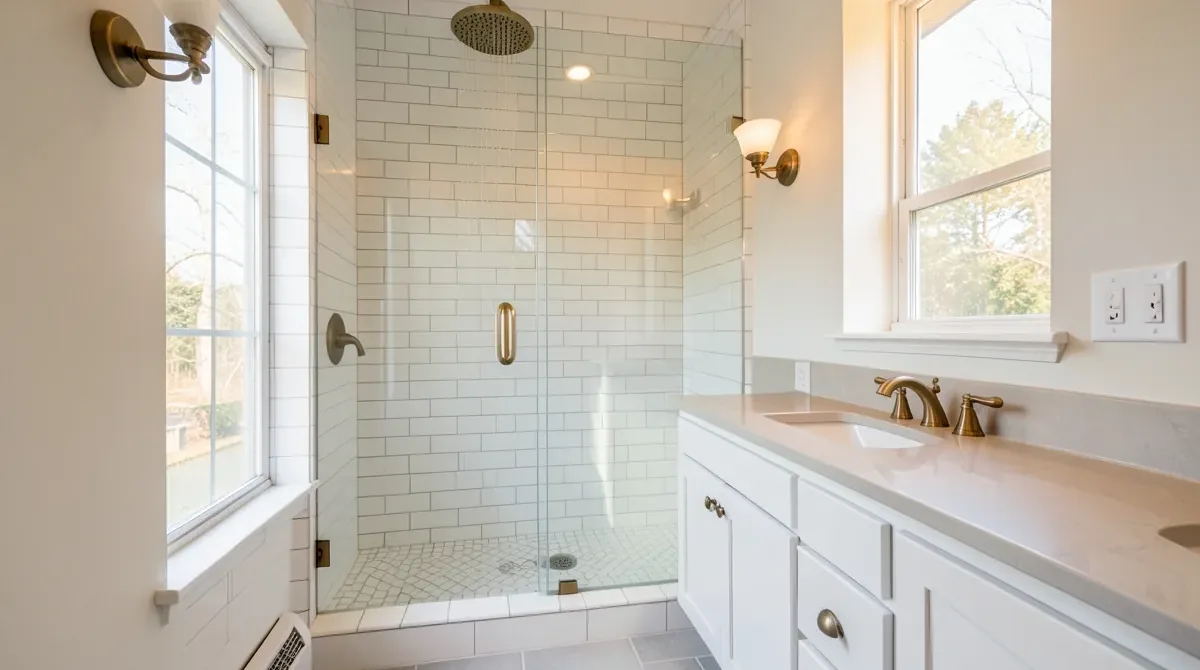
The same analysis separates projects into categories, and the movement is not uniform across them.
Discretionary improvements, which include kitchen remodels, bathroom remodels and room additions, saw do-it-yourself spending fall from 31.5 percent in 1995 to 19.1 percent in 2023.
That is a steeper decline than the overall figure. Homeowners have not abandoned doing their own work. They have become more selective about which work they take on.
Painting a bedroom and remodeling a kitchen both count as home improvement. The risk, the tooling, the knowledge and the hours involved have almost nothing in common.
What a Kitchen Actually Involves
Part of the explanation is visible the moment you list what a full kitchen touches.
Cabinet design and measurement. Demolition. Plumbing. Electrical. Lighting. Flooring. Drywall. Cabinet installation. Countertop templating. Appliance specifications. Backsplash. Paint. Inspections. And the scheduling that keeps those trades from colliding with each other.
A bathroom is less forgiving still. Behind a finished tile shower sit waterproofing, drain placement, slope, substrate, ventilation and electrical requirements, nearly all of which disappear behind the surfaces when the work is done.
Done properly, none of it is ever thought about again. Done poorly, the repair is a larger project than the original.
A Better Question Than “Can I Do This?”
With enough patience and enough video tutorials, most people can attempt most things.
The more useful question is what happens if it goes wrong.
Paint the wrong color and you repaint. Set a cabinet pull slightly off and you move it. Waterproof a shower incorrectly and you may not learn about it until water has reached the framing. Measure a kitchen layout wrong and the problem surfaces after custom cabinetry has already arrived.
That is why work involving water, electricity, structure, custom material or several trades at once sits in a different category from cosmetic work. The consequence of an error, not the difficulty of the task, is what should drive the decision.
Experience belongs in the calculation too. Someone who has renovated three houses and owns the tools is in a different position from someone starting their first project.
Your Time Is Not Free
This is the most commonly skipped cost.
Homeowners tend to compare the price of materials plus their own labor against the price of hiring someone. The second half of that comparison is wrong, because the labor is not free. It is paid for in evenings and weekends.
Work that occupies a crew for a stretch of consecutive days can stretch across many weekends when it is fitted around jobs, children and everything else.
Worth asking honestly. How many evenings and weekends am I willing to give this? How long can the kitchen or bathroom be out of service? What happens if it takes considerably longer than I expect?
What You Are Buying Beyond Labor
A professional price is not an hourly wage with a margin on top.
It generally covers project management, design, scheduling, trade coordination, purchasing and delivery management, specialized equipment, insurance, permitting, whatever after-completion coverage a given company offers, and responsibility for putting problems right.
The same Harvard analysis puts the scale of that in dollars. Of the $405.0 billion spent on home improvements in 2023, professionally installed work accounted for $340.5 billion.
That does not make professional work inexpensive. It suggests a growing number of households have concluded the surrounding responsibility is worth paying for.
The Older House Problem
Lancaster County has a lot of housing built well before 1978, and that changes the do-it-yourself calculation in a way many homeowners have never been told.
The EPA’s guidance for do-it-yourselfers is direct about it. The federal Renovation, Repair and Painting Rule generally does not apply to homeowners working on their own home, so the legal requirement that binds contractors does not bind you. The rule does apply if you rent out part of the property, run a childcare operation there, or are renovating to resell.
What EPA says next is the part worth reading twice. It recommends hiring a lead-safe certified contractor for this work, and it states plainly that do-it-yourself projects can easily create dangerous lead dust. Anyone proceeding on their own is advised to test for lead-based paint, contain the work area, control the dust and waste, and clean thoroughly afterwards.
Not being legally required to follow a safety practice is a different thing from the practice not mattering.
The Middle Option
The choice is not only between doing everything and hiring everything.
A household might hire out design, cabinetry, plumbing, electrical and countertops while handling paint or some demolition themselves. Another might buy certain materials directly and arrange their own installation.
What makes a split arrangement work is deciding who owns what before anything starts. Where responsibility is vague, a saving turns into an argument the first time something does not fit.
If you are weighing the project against buying a different house, our guide on whether to remodel or move covers that decision. For the financing side, see what higher interest rates mean for a remodel budget.
Frequently Asked Questions
01Are fewer homeowners doing their own remodeling?
On larger projects, yes. Harvard’s Joint Center for Housing Studies found do-it-yourself work fell from 23.8 percent of home improvement spending in 1995 to 15.9 percent in 2023. On discretionary projects such as kitchens and bathrooms, the share fell from 31.5 percent to 19.1 percent over the same period.
02Which parts of a remodel can I reasonably do myself?
Cosmetic and low-consequence work is where homeowners most often succeed. Painting, installing cabinet hardware, removing certain finishes, some floating floor systems and portions of demolition are common examples. Work involving water, electricity, structure or expensive custom material carries a different level of risk.
03Does doing it myself actually save money?
It can, and the saving depends heavily on the project and on what goes right. Material costs stay the same either way. What you avoid is labor, and what you take on is the time, the tooling, the coordination and the cost of correcting anything that goes wrong.
04What is a hybrid remodel?
An arrangement where a homeowner handles part of the work and a contractor handles the rest, often with the technical trades hired out and cosmetic work kept in-house. It can work well. The thing that makes or breaks it is agreeing exactly who is responsible for what before any work starts.
05Why is bathroom work singled out as higher risk?
Because most of what matters is hidden. Waterproofing, drain placement, slope, substrate and ventilation all sit behind the finished surfaces. A mistake in any of them may not reveal itself until water has reached framing or flooring, at which point the repair is larger than the original job.
Lancaster Kitchens and Baths: Design-Build Remodeling in Lancaster County
Lancaster Kitchens and Baths handles kitchen and bathroom remodeling from design through construction, with a showroom in Landisville where you can see and touch materials before you choose them. NKBA Certified Member and a member of the Building Industry Association of Lancaster County.
Our Services Include:
- LKB Home Center: A Landisville showroom where selections happen in person, with someone walking you through them
- Bathroom Design and Remodeling: Full and partial bathroom renovations, guest and primary
Thinking about a remodel? Get a free quote and we will walk through what the project involves.
PA Registration #153628
Works Cited
- Xu, Luna. “Home Improvement Spending Has Shifted Away from DIY.” Joint Center for Housing Studies of Harvard University, 21 Sept. 2026, www.jchs.harvard.edu/blog/home-improvement-spending-has-shifted-away-diy. Accessed 29 Oct. 2026.
- United States Environmental Protection Agency. “Lead-Safe Renovations for DIYers.” EPA, epa.gov/lead/renovation-repair-and-painting-program-do-it-yourselfers. Accessed 29 Oct. 2026.
Remodeling costs vary with scope, materials, structural conditions, and the age of the home. Figures here are general context, not a quote.
This article is general information and is not legal advice. Federal and state requirements change. Confirm current rules with the EPA or the Pennsylvania Office of Attorney General.